Maintaining Your Tools: Essential Care for Longevity
Maintaining Your Tools
Maintaining Your Tools: Woodworking tools are the lifeblood of any craftsman’s workshop. Whether you’re a seasoned professional or a hobbyist, keeping your tools in top condition is essential for creating high-quality projects and ensuring safety. Proper maintenance not only extends the life of your tools but also improves their performance and saves you money in the long run. In this guide, we’ll cover everything you need to know about maintaining your tools for longevity.
Why Tool Maintenance Matters
Tools are an investment, and like any investment, they require care to maximize their value. Neglected tools can become dull, rusty, or even dangerous to use. Here are a few reasons why regular maintenance is crucial:
Safety: Dull or damaged tools can slip or malfunction, increasing the risk of accidents.
Efficiency: Well-maintained tools work more effectively, saving time and effort.
Cost-Effectiveness: Proper care reduces the need for frequent repairs or replacements.
Precision: Clean, sharp tools ensure accurate and professional results in your projects.
General Maintenance Tips for All Tools
While different tools require specific care, there are universal maintenance practices that apply to most woodworking equipment:
Keep Tools Clean: After every use, wipe your tools with a clean, dry cloth to remove dust, debris, and moisture.
Store Tools Properly: Use a dry, organized storage space to prevent rust and protect tools from damage.
Inspect Regularly: Check for signs of wear and tear, such as cracks, rust, or loose parts.
Lubricate Moving Parts: Regularly apply lubricant to hinges, bearings, and other moving parts to ensure smooth operation.
Sharpen Blades: Keep cutting edges sharp for precise and effortless work.
Maintaining Hand Tools
Hand tools, such as chisels, hammers, and screwdrivers, are staples in any workshop. Here’s how to care for them:
1. Cleaning
Use a stiff brush or cloth to remove sawdust and debris.
For sticky residues, use a mild solvent like mineral spirits.
2. Rust Prevention
Apply a thin coat of oil or a rust-preventive spray to metal surfaces.
Store tools with silica gel packets to absorb moisture.
3. Sharpening and Honing
Regularly sharpen chisels and plane irons using a sharpening stone or honing guide.
Keep screwdrivers’ tips in good condition by filing or grinding them as needed.
4. Handle Care
Check wooden handles for cracks or splinters. Sand and refinish as necessary.
Tighten or replace loose handles to maintain proper functionality.
Caring for Power Tools
Power tools like drills, saws, and routers require additional attention due to their complexity and electrical components. Here are some tips:
1. Cleaning
Use compressed air to blow out dust and debris from vents and crevices.
Wipe down surfaces with a damp cloth, avoiding electrical components.
2. Check Electrical Connections
Inspect power cords for frays or damage. Replace them immediately if compromised.
Test batteries regularly and store them in a cool, dry place.
3. Lubrication
Follow the manufacturer’s instructions for lubricating moving parts.
Use appropriate grease or oil to maintain gears and bearings.
4. Blade and Bit Maintenance
Keep blades sharp and clean to ensure efficient cutting.
Replace worn or damaged bits to prevent undue strain on the motor.
Specialized Tool Care
1. Table Saw
Align the blade and fence for precise cuts.
Clean the tabletop with a rust remover and apply a protective wax coating.
Regularly check the blade for sharpness and replace as needed.
2. Router
Clean collets and bits to prevent slipping.
Ensure the motor housing is free of dust and debris.
Lubricate the plunge mechanism for smooth operation.
3. Planer
Keep the cutterhead and rollers clean.
Adjust the blade height for consistent results.
Check for alignment and make necessary adjustments.
Preventing Common Tool Problems
Rust
Keep tools dry and apply a rust inhibitor regularly.
Use a dehumidifier in your workshop to control moisture levels.
Dull Blades
Sharpen tools frequently to maintain their edge.
Avoid cutting through nails or other hard materials that can dull blades quickly.
Misalignment
Regularly calibrate tools like table saws and miter saws.
Use a square or alignment gauge to check for accuracy.
Organizing Your Workshop
Proper organization plays a significant role in tool maintenance. Here are a few tips:
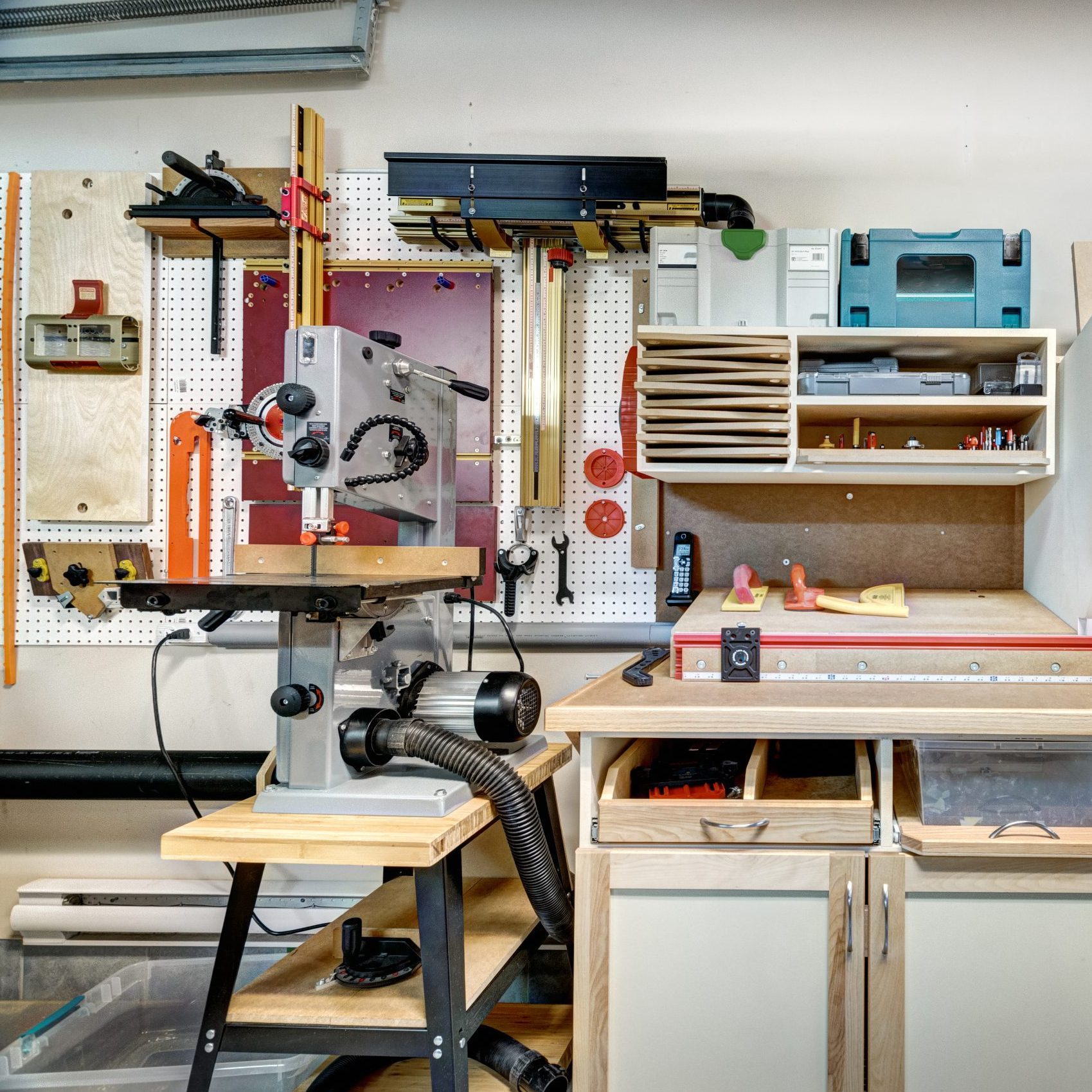
Tool Storage: Use pegboards, tool chests, or wall-mounted racks to keep tools accessible and protected.
Labeling: Label drawers and containers for easy identification of tools.
Cleaning Station: Set up a dedicated area for cleaning and maintaining tools.
The Role of Proper Usage
Using tools correctly is as important as maintaining them. Misuse can lead to premature wear and damage. Follow these guidelines:
Read the Manual: Always refer to the manufacturer’s instructions for proper use and care.
Avoid Overloading: Use tools within their specified capacity to prevent strain.
Use the Right Tool for the Job: Don’t substitute tools; using the wrong tool can cause damage and compromise safety.
Scheduling Maintenance
Creating a maintenance schedule helps ensure your tools are consistently cared for. Here’s an example:
Daily: Clean tools after use and inspect for visible damage.
Weekly: Sharpen blades, lubricate moving parts, and organize storage.
Monthly: Perform detailed inspections, clean power tools thoroughly, and test electrical components.
Annually: Deep clean all tools, replace worn parts, and recalibrate precision equipment.
When to Replace Tools
Even with the best care, tools have a finite lifespan. Replace tools when:
Repairs become frequent and costly.
They no longer perform efficiently or safely.
Wear and tear compromise their structural integrity.
Conclusion
Maintaining your tools is an essential aspect of woodworking that ensures safety, efficiency, and cost-effectiveness. By implementing regular cleaning, proper storage, and routine inspections, you can extend the life of your tools and enhance the quality of your work. Remember, a well-maintained tool is a reliable tool, and investing time in maintenance is investing in your craft’s success. Start your maintenance routine today and experience the benefits of a well-cared-for workshop!
Mastering Carpentry: A Complete Guide to Essential Tools and Techniques
Discover essential carpentry tools for every woodworking project, from hand tools to power tools, and learn how to maintain and store them effectively.
carpentry tools
Understanding the Importance of Carpentry Tools
Carpentry tools are essential for anyone looking to engage in woodworking projects, whether for personal enjoyment or professional work. The variety of tools available serves specific functions that facilitate the cutting, shaping, and assembling of materials, primarily wood. Having a well-selected set of tools not only enhances efficiency but also ensures a high level of accuracy in every project undertaken. For instance, using a high-quality tape measure can significantly impact achieving precise dimensions, which is critical for fitting parts together seamlessly and avoiding costly mistakes.
The distinction between hand tools and power tools is crucial in understanding their individual functionalities and usage scenarios. Hand tools, such as hammers and chisels, require physical effort to operate, providing the user with greater control and finesse during tasks. Power tools, such as saws and drills, offer speed and efficiency, making them preferable for larger and more demanding projects. The growing trend of DIY carpentry projects among homeowners has resulted in many individuals investing in both types of tools, leading to a more hands-on approach in home renovations. A well-equipped toolkit can significantly improve project outcomes, resulting in a higher quality of craftsmanship and satisfaction for both the carpenter and the homeowner.
As more people engage in DIY projects, the importance of understanding the various carpentry tools has become more pronounced. Many homeowners are discovering the joy of woodworking, which not only fosters creativity but also allows for personalized home improvements. By investing in quality tools, even novice carpenters can create pieces that last and enhance their living spaces.
Essential Carpentry Hand Tools
For beginners venturing into the world of carpentry, specific hand tools are indispensable for completing a variety of tasks. A claw hammer, ideally weighing around 20 oz., Driving and pulling nails effectively, making it a staple in any toolbox. A retractable 25-foot tape measure is also crucial, as it ensures accurate measurements and helps prevent costly errors that can arise from miscalculations. Additionally, a utility knife with disposable blades is versatile for various cutting tasks, ranging from opening boxes to trimming wood, making it a handy tool to have on hand.
Other essential hand tools include a variety of screwdrivers, encompassing both flathead and Phillips types to accommodate different fasteners encountered in carpentry projects. Levels, particularly a 48” level and a smaller 8” torpedo level, are necessary for checking the alignment of surfaces to ensure that everything is straight and true. Each of these tools plays a specific role in ensuring that carpentry projects are completed accurately and efficiently, which is vital for achieving professional results.
Understanding how to use these hand tools effectively is equally important. For example, mastering the technique of using a chisel can greatly enhance a carpenter’s ability to create clean joints and detailed work. Additionally, investing time in learning the proper use of a utility knife can prevent injuries and improve cutting accuracy. The mastery of hand tools is a fundamental aspect of becoming a skilled carpenter.
Power Tools for Carpentry
Power tools have dramatically transformed the carpentry landscape, making tasks more manageable, efficient, and less time-consuming. Among the most common power tools are planers, wood routers, and drill presses, each serving unique and essential functions in woodworking. For instance, a cordless wood router is particularly valued for its convenience, allowing carpenters to shape edges and create joinery with ease and precision. Furthermore, dust collectors are increasingly recognized as essential equipment, as they maintain a clean workspace and help prevent debris from obstructing visibility or causing accidents.
Table saws are indispensable for making precise cuts on larger pieces of wood, which is essential for achieving the desired dimensions and fit. On the other hand, jigsaws are perfect for cutting curves and intricate shapes, making them ideal for detailed projects like furniture making. The combination of speed and precision that power tools offer can significantly elevate the quality of the work produced, allowing carpenters to tackle more complex designs efficiently.
The safety features of many modern power tools also contribute to their widespread usage. For example, newer models of table saws often come equipped with blade guards and anti-kickback devices, providing an added level of protection for users. This focus on safety, alongside improved performance, makes power tools an essential component of any carpenter’s toolkit.
Specialized Carpentry Tools
Specialized carpentry tools play a vital role in executing specific tasks with enhanced accuracy and efficiency. For example, a sliding bevel is a tool used for marking angles, which allows carpenters to save time on repetitive tasks while ensuring precision. A layout square, particularly a 6” metal combination square, is invaluable for making accurate angle measurements and ensuring that cuts are square, which is essential for quality craftsmanship.
Nail set tools are necessary for finishing work, as they enable the nail heads to be driven flush with the wood surface, creating a clean and professional appearance. Additionally, woodworking jigs are beneficial for repetitive cuts, allowing for consistent results across multiple pieces. Clamps of various types are also essential, providing the stability and security needed when working on multiple pieces simultaneously, thus preventing movement during assembly.
Many carpenters also utilize specialized measuring tools, such as moisture meters, which are critical for ensuring that wood is at the appropriate moisture content before use. This is particularly important in preventing warping or cracking after the project is completed. Understanding the purpose and proper use of these specialized tools can greatly enhance a carpenter’s efficiency and the overall quality of their work.
Safety Tips for Using Carpentry Tools
Ensuring safety while using carpentry tools is paramount, as improper use can lead to accidents and injuries. Wearing appropriate safety equipment, such as gloves and goggles, is crucial for protecting oneself from potential hazards during woodworking tasks. A common example is the use of safety goggles when operating power tools, which can prevent debris from entering the eyes and causing serious injury. Additionally, maintaining a clean and organized workspace is essential to reduce the risk of slips, falls, or accidents caused by clutter.
Regularly inspecting tools for damage or wear is another important safety measure, as this can ensure safe operation. For instance, a frayed power cord can pose a significant risk of electric shock, so addressing such issues promptly is essential. Training on the correct usage of tools is vital for minimizing accidents; understanding how to handle power tools safely can prevent injuries caused by kickback or misalignment.
Carpenters should also keep first aid kits readily available on job sites, allowing for prompt responses to emergencies and ensuring that minor injuries can be treated quickly. Understanding the risks associated with specific tools and taking proactive steps to mitigate those risks can greatly enhance safety during carpentry tasks, fostering a safer working environment overall.
Carpentry Tool Maintenance
To prolong the life and efficiency of carpentry tools, regular maintenance is necessary. Cleaning tools after each use is essential to prevent rust and damage, ensuring that they remain in optimal working condition. For example, wiping down saw blades after use can prevent sap buildup, which can impair cutting performance. For hand tools, regular sharpening of blades is crucial for maintaining cutting efficiency; dull blades can lead to frustration and inaccuracies, making tasks more difficult than necessary.
Proper storage techniques also play a significant role in tool maintenance. Storing tools in a dedicated toolbox or on a pegboard not only protects them from damage but also makes them easily accessible. For power tools, lubricating moving parts can ensure smooth operation and prevent wear and tear over time. Creating a maintenance schedule to regularly check tool performance can help identify issues before they escalate into major problems, ultimately saving time and money.
Another maintenance aspect that is often overlooked is the calibration of tools such as levels and squares. Regularly checking these tools for accuracy can ensure that every project is built to specifications, enhancing the overall quality of the work produced. By prioritizing maintenance, carpenters can ensure that their tools remain reliable and effective for years to come.
Best Practices for Tool Storage
Organizing carpentry tools effectively is essential for maintaining efficiency and accessibility in the workshop or job site. Utilizing a toolbox or pegboard allows for easy access and visibility of tools, reducing the time spent searching for items. For example, grouping similar tools together on a pegboard can streamline the workflow, allowing carpenters to grab what they need quickly without disrupting their work.
Tool belts can also be beneficial for carrying frequently used items while working, keeping them within reach and minimizing the need to return to the toolbox repeatedly. Labeling storage areas for different types of tools can further enhance organization, making it easy to locate specific items when needed. Additionally, storing tools in a climate-controlled environment helps prevent damage from moisture, which can cause rust and deterioration over time.
Using magnetic strips for metal tools can keep them off surfaces, further organizing the workspace and preventing clutter. This not only enhances safety by reducing trip hazards but also allows for quick access to frequently used metal tools. An organized workspace can significantly improve productivity, as it allows carpenters to focus on their projects without the distraction of searching for misplaced tools.
Tools for Home Improvement Projects
In the realm of home improvement, specific tools can be particularly useful for completing a variety of tasks efficiently. A versatile toolkit should include items like saws and drills that can handle multiple tasks, making it easier to tackle various repairs and renovations. For instance, a cordless drill is invaluable for both drilling holes and driving screws, making it a staple for any home improvement project. Having a solid carpentry tool kit is essential for DIY enthusiasts, allowing them to feel prepared for unexpected challenges that may arise during projects.
For drywall installation, tools such as drywall knives and saws are crucial to ensure that the project runs smoothly. These tools facilitate clean cuts and proper fitting, which is essential for achieving professional results. Additionally, multi-tools are essential for addressing unforeseen repairs, providing flexibility in tackling diverse tasks. For example, a multi-tool can easily switch between functions such as cutting, sanding, and scraping, making it invaluable for quick fixes around the house.
Understanding which tools are necessary for specific tasks can greatly enhance project efficiency. For example, having a stud finder can save time when hanging heavy items on walls, ensuring that the installation is secure. By investing in the right tools and understanding their applications, homeowners can effectively manage their improvement projects.
Carpentry Tools for Furniture Making
When it comes to furniture making, there are essential tools that are specifically tailored to create beautiful and functional pieces. Hand planes, chisels, and power sanders are crucial for shaping and finishing wood, allowing for precision and attention to detail. For instance, using a hand plane can create smooth surfaces and edges, which are essential for aesthetic quality in furniture design. Specialized tools like doweling jigs are recommended for precise joinery, ensuring strong and accurate connections between pieces, which is particularly important in furniture making.
Power routers are also particularly important for adding decorative edges and joinery to furniture, allowing for intricate designs that can elevate the overall appearance of a piece. Using finishing tools like sanders and polishers is essential for achieving a refined look, enhancing the overall aesthetic appeal of the furniture created. Proper sanding techniques can also help prepare surfaces for finishes, ensuring that paint or stain adheres properly and enhances the wood’s natural beauty.
Beyond the basic tools, understanding the specific techniques used in furniture making can greatly enhance the quality of the projects. For example, knowing how to create precise mortise and tenon joints can improve the durability of the furniture. By mastering the use of specialized tools and techniques, carpenters can create high-quality, custom furniture pieces that stand out.
Final Thoughts on Carpentry Tools
Having the right tools is fundamental for successful carpentry projects, whether they are for personal use or professional endeavors. Exploring different tools and understanding their applications can enhance the overall experience of woodworking. The satisfaction derived from completing carpentry projects with well-maintained tools is unparalleled, as it reflects both skill and dedication to the craft.
Continuous learning and improvement in carpentry skills through tool mastery is essential for personal growth in this field. Investing in quality tools is not only beneficial for hobbyists but also for professionals looking to achieve the highest standards in their work. Quality tools can lead to better craftsmanship, ensuring that projects are not only completed successfully but also built to last, which is a crucial consideration in woodworking.
As carpentry continues to evolve with new technologies and techniques, embracing new tools and methods will ensure that projects remain both enjoyable and rewarding. By staying informed and proactive in tool selection and maintenance, carpenters can enhance their skills and produce exceptional work that stands the test of time. The journey of learning and mastering carpentry tools is as rewarding as the finished projects themselves.
Essential Woodworking tools:The Ultimate Woodworking Tools List
Essential Woodworking tools: Discover the must-have woodworking tools for every skill level, ensuring efficiency, safety, and precision in your projects.
Importance of Having the Right Woodworking Tools
Having the right tools is critical for any woodworking project, as they significantly enhance efficiency, accuracy, and safety. When you use the correct tools, you minimize the chances of mistakes that can lead to wasted materials and time. For instance, employing a properly calibrated level to check for horizontal and vertical alignments ensures that your shelves and cabinets are perfectly straight, preventing future issues with alignment and functionality. This level of precision not only results in aesthetically pleasing outcomes but also contributes to the durability of the final product, allowing for greater satisfaction in your work.
Understanding the various types of woodworking tools available also aids in selecting the right equipment for specific project requirements. For example, a combination square is essential for ensuring squareness in cuts, while a sliding bevel is invaluable for marking angles accurately. Knowing which specific tools to use for different tasks allows woodworkers to streamline their processes and avoid costly mistakes that could compromise their projects. Moreover, investing in quality tools often leads to better performance and lower long-term costs, as superior tools tend to last longer and require fewer replacements.
Essential Hand Tools
Among the essential hand tools every beginner should have, a level is paramount. A 48” level and an 8” torpedo level provide the necessary precision for checking horizontal and vertical alignments, ensuring the accuracy of your projects. Using these tools can help you align shelves, cabinets, and frames, which is especially important in larger projects where even minor misalignments can become pronounced over time. Additionally, a sliding bevel is invaluable for marking angles; its adjustable and lockable feature makes it efficient for repetitive tasks. For example, if you’re building a set of angled cuts for a frame, a sliding bevel will ensure that all cuts are consistent.
Another critical tool is the combination square, which serves to verify squareness in both cuts and measurements. This tool ensures that joints fit together perfectly, reducing gaps and misalignments in your work. For intricate projects, such as cabinetry, the precision of a combination square can make a significant difference in the overall appearance and durability of the finished product. A well-constructed joint can withstand the test of time, while a poorly aligned one may lead to structural issues or aesthetic shortcomings.
Power Tools for Woodworking
Power tools are indispensable in woodworking, with several being essential for various tasks. A variable speed drill, for example, is incredibly versatile, allowing woodworkers to bore holes and drive screws effectively, making it suitable for a wide range of projects. This tool can be used for everything from assembling furniture to drilling pilot holes for dowels, making it a must-have for any woodworking enthusiast. Another essential power tool is the table saw, which is vital for making straight cuts, especially in larger pieces of wood like sheets or dimensional lumber. The reliability of a table saw can drastically reduce the time spent on cutting and enhance the precision of your work.
A router also plays a critical role in woodworking, as it can hollow out areas of wood, create decorative edges, and make joints. For instance, a router can be used to create intricate edge profiles on tabletops or to cut grooves for joinery. This tool adds detail and finesse to projects, enabling woodworkers to achieve a professional finish. Investing in quality power tools not only enhances the efficiency of your work but also allows for more creative expression in your projects. The right power tools can significantly elevate the quality of your woodworking.
Essential Woodworking tools Specialty Tools
For more advanced woodworking projects, specialty tools become essential. A dremel tool, for instance, is invaluable for detailed work such as engraving and carving, allowing craftsmen to create intricate designs on their projects. This tool is particularly useful for hobbyists who wish to add personalized touches to their furniture or for artists who want to incorporate fine detail into their woodwork. Additionally, a bench grinder is crucial for sharpening tools, ensuring that chisels and planes maintain their effectiveness throughout their use. Keeping your cutting tools sharp not only improves performance but also enhances safety, as dull tools can lead to slips and accidents.
In furniture making, a mortising machine is particularly important as it creates precise mortise and tenon joints, which are fundamental to strong and durable furniture. For example, when constructing a dining table, using a mortising machine can produce joints that are not only strong but also aesthetically pleasing. These specialized tools facilitate more complex tasks and improve the overall quality of the finished product, making them invaluable for serious woodworkers. Understanding how to use these tools effectively can significantly enhance your craftsmanship.
Tool Maintenance and Care
Proper maintenance of woodworking tools is vital for ensuring their longevity and optimal performance. Regularly checking and tightening bolts and screws can prevent accidents and keep tools functioning effectively. For example, a loose blade on a table saw can lead to inaccurate cuts or even injury, so routine inspections are essential for safety and performance. Regular maintenance routines should include checking for signs of wear and tear, cleaning dust and debris from tools, and ensuring that all moving parts are well lubricated to reduce friction.
Using appropriate lubricants on the moving parts of tools reduces friction and wear, enhancing their lifespan. A well-maintained tool not only performs better but also requires less frequent replacement, saving you money over time. Establishing a cleaning routine that includes wiping down tools after use to remove sawdust and moisture is also crucial for preventing rust and degradation. A simple practice like storing your tools in a dry environment can significantly extend their life. By implementing these maintenance practices, woodworkers can save money in the long run by prolonging the life of their tools and ensuring they function optimally whenever needed.
Safety Considerations
Safety should always be a priority when working with woodworking tools. Always read the manufacturer’s instructions and safety guidelines specific to each tool to ensure proper use and to prevent accidents. For instance, wearing safety glasses while operating power tools protects your eyes from flying debris, while ear protection can prevent hearing loss from loud equipment. It’s also wise to use dust masks when sanding or cutting wood, as wood dust can be harmful when inhaled.
Maintaining a well-lit and clutter-free workspace can significantly reduce the risk of accidents. Ensuring that tools are stored properly and that the working area is organized can help prevent mishaps that might occur from tripping over tools or materials. Implementing a well-stocked first aid kit in your workshop is also advisable, as it allows for quick treatment of minor injuries. Having a first aid kit on hand ensures that you are prepared for any accidents that may occur, making your workshop a safer environment overall.
Tool Storage Solutions
Effective organization and storage of woodworking tools are crucial for maintaining an efficient workspace. Utilizing drawer organizers within tool chests can keep small items like screws, nails, and drill bits sorted and easily accessible. This organizational method prevents the frustration of searching for misplaced items during a project, allowing for a smoother workflow. For larger tools, magnetic strips can hold metal items and keep them within easy reach while maintaining a tidy workspace. This not only saves time but also contributes to a safer environment by reducing clutter.
Considering climate-controlled storage options is also wise to prevent moisture damage to tools when they are not in use. Tools made of metal can rust if exposed to humidity, while wooden tools can warp. Investing in a dehumidifier for your workspace or utilizing silica gel packets can help maintain optimal conditions. Proper storage not only prolongs the life of your tools but also makes it easier to find what you need when starting a new project, enhancing overall productivity. The right storage solutions contribute significantly to a well-organized and efficient woodworking shop.
Tool Selection Tips
When selecting woodworking tools, it’s beneficial to attend workshops or classes to gain hands-on experience with various tools before making purchases. Engaging in woodworking communities or forums can also provide valuable insights and recommendations on tool brands and models from experienced woodworkers. These platforms offer a wealth of information, including reviews and practical advice that can guide beginners in making informed choices about their tool investments.
Evaluating the frequency of tool use is another effective strategy; investing in tools that are essential for regular projects is often more cost-effective than purchasing those used infrequently. For example, while a CNC router may be a fantastic tool for advanced projects, a beginner may find a simple hand saw more practical and necessary at first. This approach enables woodworkers to build a collection tailored to their specific needs, allowing them to focus on mastering their craft without being overwhelmed by too many tools.
Beginner Tool Checklist
Creating a beginner tool checklist can streamline the process of acquiring essential woodworking tools. A good starting point would include clamps of various types—pipe, F-style, and spring clamps—as they are critical for holding pieces together during assembly and glue-ups. These clamps are vital for ensuring that joints are secure while the adhesive sets, preventing misalignments that can compromise the strength of the finished piece. Including measuring tools such as a speed square and combination square ensures accuracy in cuts and measurements.
Don’t forget to list safety gear, including gloves and a face shield, to protect against common woodworking hazards. Safety gear should be viewed as an integral part of your tool collection rather than an afterthought, as it significantly reduces the risk of injury while working. By compiling this checklist, beginners can gradually build their tool collection based on project needs and skill development, ensuring a solid foundation for their woodworking endeavors. Starting with the right tools not only boosts confidence but also enhances the quality of the work produced.
Advanced Woodworking Tools
For those looking to take their woodworking skills to the next level, advanced tools can greatly enhance precision and creativity in projects. A CNC router is an excellent investment for automating precise cuts and designs, which can save time and effort on complex tasks. These machines enable woodworkers to execute intricate patterns and detailed designs that would be challenging to achieve by hand. Similarly, a lathe is necessary for woodturning projects, allowing for the creation of rounded shapes and intricate designs that are often sought after in fine furniture making.
Specialty saws, such as Japanese pull saws and dovetail saws, offer enhanced precision for fine joinery work, making them ideal for detailed projects. For example, Japanese pull saws are known for their ability to make clean, fine cuts with minimal effort, which is essential for delicate work. Investing in these advanced tools can elevate your woodworking craftsmanship and open up new possibilities for creative expression. Understanding how to use these tools effectively can significantly enhance the quality of your projects, allowing for more intricate designs and professional finishes.
Recap of Essential Woodworking Tools and Techniques
A well-rounded collection of woodworking tools is essential for efficiency and safety in various projects. Beginners should focus on acquiring essential hand and power tools while gradually expanding their collection based on specific project needs and personal skill development. This gradual approach allows woodworkers to build a toolkit that is both functional and tailored to their unique style and preferences.
Ongoing education through workshops and communities can also enhance woodworking skills and knowledge of tools. Engaging with fellow woodworkers provides opportunities to learn new techniques, discover innovative tools, and stay updated on industry trends. By staying informed and practicing regularly, woodworkers can continually improve their craft and enjoy the satisfaction that comes with creating high-quality projects. Building a strong foundation in woodworking tools and techniques ensures ongoing success and enjoyment in the craft.
Sn Tools Woodworking Review. Sn Tools woodworking is a family-run business with a history of crafting high-end tools that are used by carpenters and hobbyists alike. They focus on quality craftsmanship and attention to detail in every product they produce.
Their products are designed and manufactured in a modern factory that uses cutting-edge technology to ensure accuracy, consistency and efficiency. They also carry out sustainability-focused production practices that reduce waste and use recycled materials.
Sustainability
Sustainability is the concept of ensuring that human activities do not deplete natural resources or damage the environment. This can be achieved by limiting waste, using renewable energy sources and keeping a balanced use of natural resources.
Sustainability also includes economic and social issues. These aspects are closely linked and require an approach that considers the long-term future of the world.
As part of this, sn tools woodworking focuses on providing the highest quality products that are sourced from sustainable resources. These include reclaimed and recycled woods, green construction materials and environmentally-friendly power supplies.
They are a family-owned and operated company that specializes in designing and manufacturing hand tools for both professional carpenters and hobbyists. Their products are designed to make woodworking easier, faster and more efficient.
Sn tools offers a wide range of hand and power tools for all levels of carpentry skill. They provide a selection of chisels and plane blades, power saws, drill presses and joinery machines to ensure that their customers can find the best tools for their projects.
These products are backed with a satisfaction guarantee, which means that if you don’t like them or don’t think they work well enough, SN Tools will replace them for free or refund your purchase price minus any shipping costs. This is an excellent way to save money on your tools and ensure that they’ll last for years to come.
In addition to their tools, SN tools also sells a wide variety of other woodworking supplies and equipment. These items are used to create furniture, doors, cabinets and more.
They offer a variety of payment options for their customers, including credit cards, PayPal and checks. In addition, they allow customers to spread their payments over an extended period of time if needed.
SN Tools also uses renewable resources to power their business, and they encourage their employees to recycle their own waste products such as saw dust and scraps. This helps to reduce their energy and water consumption and ensures that they’re doing all they can to be a responsible business and contribute to the environment.
Sn Tools Woodworking Review Customer Service
Sn Tools Woodworking is a well-rounded company that offers a variety of top quality tools and supplies for home improvement projects. Their products range from chisels and abrasives to power saws, drills, and a host of accessories. They also have a full service repair department that will handle any issues you may have.
The best part about their customer service is that they go the extra mile to make sure you are satisfied with your purchase. They offer a satisfaction guarantee on all their products, and they will even take back your item if you are not completely happy with it.
They also have a comprehensive list of helpful tips and tricks to help you get the most out of your purchase. These include a handy list of common mistakes to avoid and ways to increase your safety when using their tools. They also offer a wide array of financing options that are designed to make their customers’ lives easier.
Their top-notch customer service is complemented by their extensive selection of high-quality tools and accessories. These include a wide variety of cutting tools such as chisels, knives, and axes. They also have a number of special-purpose tools and supplies for specific tasks like wood lathes, spindle cutters, and even specialized routers for creating intricate edges in difficult materials.
SN Tools also has a robust warranty policy for their products, so you can rest easy knowing that your tools will be in good hands if something should go wrong with them. Their warranty is one of the most comprehensive in the industry, and they have a team of experts who are available to answer any questions you may have.
As a result of their dedication to superior craftsmanship and their commitment to the environment, they produce some of the most highly-engineered and functional woodworking tools on the market. Their production processes use state-of-the-art machinery and components to create a top-of-the-line tool that will last you for years to come.
Sn Tools Woodworking Review Product Variety
At sn tools woodworking, we stock a wide range of high-quality, top-of-the-line products that are designed to help you complete your next project and craft. Whether you’re just starting out or have been a woodworker for years, we offer some of the best prices in town on all of the essential tools needed for your projects.
We also carry a variety of power tools from JET and other brands to help you with your projects. This includes hand and cordless drills, planers, chop saws, rotary tools, and more.
Another tool that’s a staple in our shop is a hammer. This type of tool is not only useful for nailing wood into place, but it’s also handy for removing screws and making precise holes in various sizes and shapes.
A caliper is another important tool that’s used for measuring things like thickness and internal diameters. These can be difficult to measure with a tape measure or ruler, but a caliper is much more accurate and allows you to make finer measurements.
These are essential for every woodworker. Get a few Phillips-head screwdrivers, as well as a stubby one for those tight spaces. It’s also a good idea to have a ratcheting screwdriver on hand for emergencies.
You’ll also need a pair of miter and sliding bevel squares for checking angles on your projects. These are helpful because they’re adjustable and can lock at any angle, which makes it easier to mark a lot of different angles.
If you’re working with larger pieces of lumber, you’ll need a frame square. This comes in a variety of sizes, including 6″ and 12″. We also have a combination square that’s great for determining distance and angles.
Finally, you’ll need a variety of clamps to hold your work together. Some are simple and come in a variety of sizes, while others feature advanced technology that lets you attach them to the edge of your piece so they’re secure and tight.
Having a variety of tools in your arsenal will help you stay organized and ensure that you have all the supplies you need for your project. This will allow you to finish it faster and save you money on materials.
Technology
Sn tools woodworking uses advanced technology to provide a wide range of high-quality products to help their customers create beautiful woodwork. Their tools are built using only the finest materials and precision engineering principles. They are also renowned for their personalized customer service and exceptional value for money.
Sn Tools Woodworking is a family-run business that specializes in manufacturing hand tools and power tools for DIYers and professional carpenters alike. The company strives to deliver quality craftsmanship and individualized customer service with every product they sell, making it one of the best places to shop for custom-made saws, knives and other cutting tools.
The company aims to be sustainable and eco-friendly in all aspects of their operations. This includes recycling all of their waste materials and using renewable energy sources for powering their woodworking shop. They also offer workshops and one-on-one guidance sessions to teach patrons how to use their products properly and effectively.
In addition to the variety of tools available from SN Tools, they have a wide selection of accessories and specialized systems for various types of projects. These include router bits, drill bits, clamps, chisels and lathes.
They also offer a variety of different types of jigsaws. Jigsaws have a reciprocating motion and are used to cut arcs in workpieces. These can be vertical or horizontal.
Depending on the type of wood being processed, a specific tool material may be necessary. For example, for processing hardwood species (oak, ash, hornbeam, ebony, pink lapacho), the structure and chemical composition of the timber may require a different tool material than when processing softwoods (spruce, pine, larch).
This is why they make sure to select only the best materials for their tools. They also have a variety of different coatings that can be used to increase their durability.
These coatings can improve their performance by reducing friction between the tool and the substrate and thereby increasing the tool’s wear resistance. They can also help with the prevention of tool fracture and chipping, resulting in lower power consumption and increased machining efficiency. They can be deposited on various surfaces of the tool via Physical Vapor Deposition (PVD) and Chemical Vapor Deposition (CVD) methods.
Woodworking Tools For Small Projects. There comes a time when your skills have increased and you want to expand your capabilities in the wood shop. A basic set of tools will get you started, but if you’re like many woodworkers, there will be a desire to add some more.
A tape measure is one of the most important hand tools for any woodworker. Make sure to get a retractable one that’s at least 25 feet long.
Tape Measure
Tape measures are one of those woodworking tools that aren’t quite as well known as their hammer and drill counterparts but that are just as important. The adage that “measure twice, cut once” is a tried-and-true guiding principle for getting the most out of any construction or hobby project.
The basic idea behind a tape measure is that the blade (or metallic ribbon) is wrapped in a flexible plastic or metal tape that has markings that indicate how much length there is on it. Imperial units are usually on the top row of markings while metric measurements are displayed on the bottom.
Many tape measures also have a thumb lock that prevents the blade from automatically retracting back into its housing when you are carrying out measurements. This is a very useful feature and can save you time.
Another essential part of a tape measure is the hook at the end, which serves as both a nail grab and a scribing tool. This can come in handy when you’re measuring something that may not be a finished surface, like wall studs.
You should always make sure that the hook isn’t bent or warped when you are using a tape measure as this can lead to inaccurate measurements. To test for accuracy, pull a line on a straight edge with each tape measure you’re using and compare the results. This will help you know if the measurements are accurate or if the markings need to be readjusted.
Woodworking Tools For Small Projects:Triangle Square
Woodworking Tools For Small Projects. If you’re planning to make a small project, a triangle square is an excellent tool to have on hand. They’re not only useful for checking for squareness, but can also be used to scribe straight and angled lines.
The right square for your needs will depend on the size of your project. For example, you’ll need a larger square if you’re planning to build a shed or a large piece of furniture.
To find the right square, look for a quality model with high-contrast markings and easy-to-use scribe lines. These are essential for ensuring accuracy and consistency when working with smaller wood pieces.
You can also choose a combination square with multiple measuring functions. These tools can measure right angles, forty-five degree angles, circular measurements, and more.
Another option is a double square, which measures 90-degree angles in pairs. The head of the double square is adjustable and can hold the shape and length of an angle to easily transfer measurements.
Finally, a speed square can be used to mark roof pitches or guide circular saws for short 45 and 90-degree cuts. It can also be used to measure the rise and run of a rafter.
Beam Cutter
A good beam cutter is a handy tool for timber framers and log home builders. It makes it easier to make a clean beam cut, which is critical for the construction of a truss or rafters. It’s also useful for making a rafter pitch cut, miter cuts and compound angles.
It can be used to convert a worm drive circular saw to a versatile and powerful tool that can cut lumber up to 12 inches thick. It’s compatible with a number of different saw models, including Bosch and Skill 7 1/4 and 8 1/4 worm drive circular saws, as well as sidewinder saws.
Beam cutters can be used for a wide variety of tasks, but they’re especially handy for cutting thick boards. They’re often used for rafter pitches and miters, but they can also be used for log cuts, rip cuts, and compound angles.
They can be a bit overpowering, but they’re also an essential tool for woodworkers. They’re much faster and more efficient than a circular saw, and they’re great for cutting long rip cuts or long curved pieces.
Another woodworking tool that’s an essential part of any beginner’s set is a layout square or combination square. A small 6′′ model is easy to carry and comes in a variety of sizes, making it useful for marking a number of angles quickly.
Chain Mortiser
Chain mortisers are a specialized tool that can quickly cut square holes into wood, often to create mortise and tenon joints or post and beam fittings. They are very powerful and portable, so they are popular among carpenters who work on job sites.
They also have a large adjusting range, making them convenient for cutting larger timbers. They may feature a depth gauge to control how deep the chain cuts.
There are many variations of chain mortisers, including stationary and portable machines. Stationary models are generally much heavier and can support the weight of the piece of wood being cut.
The Makita 7104L is a portable chain mortiser that is engineered with power and accuracy features for timber framing and log home building. It features an 10.5 amp motor that delivers 3,200 RPM for quick notching or cutting holes in thick wood stock. The razor sharp chain is engineered for clean and accurate cutting.
It also has a head travel that can be adjusted from 4 3/4 to 6 inches. This is important because the extra length gets you down to the workpiece even before you begin to cut it.
There is a knob towards the bottom center that allows you to tilt the head by a few degrees. This is a useful adjustment, as it helps to make under cut mortises that are wider at the bottom than at the top.
Jointer
The jointer is a woodworking tool that helps craftspeople achieve flat, square stock for their projects. This is particularly important for fine woodworking, where the pieces need to be perfect, and edges that are out of square or sections that are thicker or thinner than the rest can wreck the whole thing.
The primary function of the jointer is to flatten one face or edge of a board prior to milling it into geometrically precise blocks. It can also be used for rabbeting, beveling, and tapering.
A jointer consists of an infeed table and an outfeed table that sit coplanar with each other. This means the cutting circle is aligned with the height of the outfeed table so that the board can be cut straight and flat.
Once the board is fed across the infeed table, it moves to the outfeed table where it is supported as it is cut. A set of knives on the cutter head are aligned with the height of the outfeed tables, and the blades are dead-flushed so that the surface is cut parallel to the outfeed table.
Jointers are usually equipped with a fence that slides perpendicular to the tables and allows you to set the width of your board to match the table’s dimensions. Safety is a big concern with this tool, so make sure the fence is properly positioned and that the blade is sharp and clean before you use it.
Woodworking Tools For Small Projects:Router
The router is one of the most versatile woodworking tools you can own, and it’s an excellent addition to your tool collection for a variety of projects. It can be used for cutting and bending, as well as making joints.
A router is a hardware device that connects your modem and other network devices, including computers, tablets, smartphones, printers, and smart appliances, to the internet through a single, shared connection. The device provides a centralized management point that allows you to manage data packets, monitor bandwidth usage, and create security settings to control access to your network.
Routers direct internet traffic and manage connections between devices on different networks using the IP (internet protocol) system. Without a router, each device would need its own Internet connection, which can be expensive and complicated.
Routing plane: The forwarding plane sends data packets between incoming and outgoing interface connections, using information stored in the packet header to match it with entries in a routing table. It also analyzes a destination IP address of a given packet and compares it to the router’s routing tables to decide its next path.
A router is more capable as compared to other networking devices, like a hub or switch, as it has more capability to analyze and change data while transferring them over the network. It also provides more features such as firewall, VPN, QoS, traffic monitoring and so on.