Sn Tools Woodworking Review

sn tools woodworking
Sn Tools Woodworking Review


Sn Tools Woodworking Review

Sn Tools Woodworking Review. Sn Tools woodworking is a family-run business with a history of crafting high-end tools that are used by carpenters and hobbyists alike. They focus on quality craftsmanship and attention to detail in every product they produce.

Their products are designed and manufactured in a modern factory that uses cutting-edge technology to ensure accuracy, consistency and efficiency. They also carry out sustainability-focused production practices that reduce waste and use recycled materials.

Sustainability

Sustainability is the concept of ensuring that human activities do not deplete natural resources or damage the environment. This can be achieved by limiting waste, using renewable energy sources and keeping a balanced use of natural resources.

Sustainability also includes economic and social issues. These aspects are closely linked and require an approach that considers the long-term future of the world.

As part of this, sn tools woodworking focuses on providing the highest quality products that are sourced from sustainable resources. These include reclaimed and recycled woods, green construction materials and environmentally-friendly power supplies.

They are a family-owned and operated company that specializes in designing and manufacturing hand tools for both professional carpenters and hobbyists. Their products are designed to make woodworking easier, faster and more efficient.

Sn tools offers a wide range of hand and power tools for all levels of carpentry skill. They provide a selection of chisels and plane blades, power saws, drill presses and joinery machines to ensure that their customers can find the best tools for their projects.

These products are backed with a satisfaction guarantee, which means that if you don’t like them or don’t think they work well enough, SN Tools will replace them for free or refund your purchase price minus any shipping costs. This is an excellent way to save money on your tools and ensure that they’ll last for years to come.

In addition to their tools, SN tools also sells a wide variety of other woodworking supplies and equipment. These items are used to create furniture, doors, cabinets and more.

They offer a variety of payment options for their customers, including credit cards, PayPal and checks. In addition, they allow customers to spread their payments over an extended period of time if needed.

SN Tools also uses renewable resources to power their business, and they encourage their employees to recycle their own waste products such as saw dust and scraps. This helps to reduce their energy and water consumption and ensures that they’re doing all they can to be a responsible business and contribute to the environment.

Sn Tools Woodworking Review Customer Service

Sn Tools Woodworking is a well-rounded company that offers a variety of top quality tools and supplies for home improvement projects. Their products range from chisels and abrasives to power saws, drills, and a host of accessories. They also have a full service repair department that will handle any issues you may have.

The best part about their customer service is that they go the extra mile to make sure you are satisfied with your purchase. They offer a satisfaction guarantee on all their products, and they will even take back your item if you are not completely happy with it.

They also have a comprehensive list of helpful tips and tricks to help you get the most out of your purchase. These include a handy list of common mistakes to avoid and ways to increase your safety when using their tools. They also offer a wide array of financing options that are designed to make their customers’ lives easier.

Their top-notch customer service is complemented by their extensive selection of high-quality tools and accessories. These include a wide variety of cutting tools such as chisels, knives, and axes. They also have a number of special-purpose tools and supplies for specific tasks like wood lathes, spindle cutters, and even specialized routers for creating intricate edges in difficult materials.

SN Tools also has a robust warranty policy for their products, so you can rest easy knowing that your tools will be in good hands if something should go wrong with them. Their warranty is one of the most comprehensive in the industry, and they have a team of experts who are available to answer any questions you may have.

As a result of their dedication to superior craftsmanship and their commitment to the environment, they produce some of the most highly-engineered and functional woodworking tools on the market. Their production processes use state-of-the-art machinery and components to create a top-of-the-line tool that will last you for years to come.

Sn Tools Woodworking Review Product Variety

At sn tools woodworking, we stock a wide range of high-quality, top-of-the-line products that are designed to help you complete your next project and craft. Whether you’re just starting out or have been a woodworker for years, we offer some of the best prices in town on all of the essential tools needed for your projects.

We also carry a variety of power tools from JET and other brands to help you with your projects. This includes hand and cordless drills, planers, chop saws, rotary tools, and more.

Another tool that’s a staple in our shop is a hammer. This type of tool is not only useful for nailing wood into place, but it’s also handy for removing screws and making precise holes in various sizes and shapes.

A caliper is another important tool that’s used for measuring things like thickness and internal diameters. These can be difficult to measure with a tape measure or ruler, but a caliper is much more accurate and allows you to make finer measurements.

These are essential for every woodworker. Get a few Phillips-head screwdrivers, as well as a stubby one for those tight spaces. It’s also a good idea to have a ratcheting screwdriver on hand for emergencies.

You’ll also need a pair of miter and sliding bevel squares for checking angles on your projects. These are helpful because they’re adjustable and can lock at any angle, which makes it easier to mark a lot of different angles.

If you’re working with larger pieces of lumber, you’ll need a frame square. This comes in a variety of sizes, including 6″ and 12″. We also have a combination square that’s great for determining distance and angles.

Finally, you’ll need a variety of clamps to hold your work together. Some are simple and come in a variety of sizes, while others feature advanced technology that lets you attach them to the edge of your piece so they’re secure and tight.

Having a variety of tools in your arsenal will help you stay organized and ensure that you have all the supplies you need for your project. This will allow you to finish it faster and save you money on materials.

Technology

Sn tools woodworking uses advanced technology to provide a wide range of high-quality products to help their customers create beautiful woodwork. Their tools are built using only the finest materials and precision engineering principles. They are also renowned for their personalized customer service and exceptional value for money.

Sn Tools Woodworking is a family-run business that specializes in manufacturing hand tools and power tools for DIYers and professional carpenters alike. The company strives to deliver quality craftsmanship and individualized customer service with every product they sell, making it one of the best places to shop for custom-made saws, knives and other cutting tools.

The company aims to be sustainable and eco-friendly in all aspects of their operations. This includes recycling all of their waste materials and using renewable energy sources for powering their woodworking shop. They also offer workshops and one-on-one guidance sessions to teach patrons how to use their products properly and effectively.

In addition to the variety of tools available from SN Tools, they have a wide selection of accessories and specialized systems for various types of projects. These include router bits, drill bits, clamps, chisels and lathes.

They also offer a variety of different types of jigsaws. Jigsaws have a reciprocating motion and are used to cut arcs in workpieces. These can be vertical or horizontal.

Depending on the type of wood being processed, a specific tool material may be necessary. For example, for processing hardwood species (oak, ash, hornbeam, ebony, pink lapacho), the structure and chemical composition of the timber may require a different tool material than when processing softwoods (spruce, pine, larch).

This is why they make sure to select only the best materials for their tools. They also have a variety of different coatings that can be used to increase their durability.

These coatings can improve their performance by reducing friction between the tool and the substrate and thereby increasing the tool’s wear resistance. They can also help with the prevention of tool fracture and chipping, resulting in lower power consumption and increased machining efficiency. They can be deposited on various surfaces of the tool via Physical Vapor Deposition (PVD) and Chemical Vapor Deposition (CVD) methods.


Hand Tool Woodworking Benches

Hand Tool Woodworking Benches

Hand Tool Woodworking Benches

Hand Tool Woodworking Benches. A good work bench is one of the most important pieces of equipment in your shop. It needs to be able to handle the abuse of hand tool woodworking, but it also needs to suit your particular type of project.

Choosing the right bench can be confusing if you are not familiar with what features to look for in a workbench. The key is to start with a detailed materials list and plan your woodworking project.

What to Look for

No woodworker’s workshop is complete without a proper workbench. Whether you choose to build your own or buy a ready-made one, it’s critical to select the best bench for your needs.

A well-made workbench should be sturdy, stable, and wide enough to accommodate your tools and the materials you need to use them. It should also be big enough to provide you with a comfortable workspace when you’re working on your projects.

You’ll find benches of all shapes and sizes at your local woodworking store or online. Many feature a tool well or pegboard back that helps keep your tools and supplies organized, safe and within reach.

Some woodworkers prefer the security of a well, which can hold items that are in frequent use, like screwdrivers and hammers, but others complain that the well steals counterspace. A well also makes it easier to locate a screwdriver, chisel or other item if you drop it on the floor.

Other features to look for include an end vise (Photo B) and face vise (Photo D), both designed to hold workpieces while you cut, shape or assemble them. Face vises usually have wooden jaws that can be positioned to suit right- and left-handed woodworkers, while end vises typically have dogs (Photo E) for holding long workpieces that span the top of the bench.

Another common feature on hand tool woodworking benches is a dog hole, which fits into a benchtop and provides a place to rest your workpieces while you plan, cut, or shape them. These holes come in square and round varieties, and are often paired with bench dogs to secure workpieces in place while you plane or saw them to shape.

A ruler is also a must-have for all woodworkers. It’s a necessity for measuring projects or making precise cuts in smaller pieces of wood. A good rule should be at least 24 to 48 inches in length.

A good set of scissors is a must for any craftsman, and woodworkers should especially consider bent-handled models as they’re more ergonomic. They’re particularly handy for cutting fabric, paper, or thin strips of wood to straight lines.

Workbench Sturdiness and Stability

Whether you’re building furniture for your home or creating custom items for commercial use, hand tool woodworking requires a sturdy workbench. A workbench should be sturdy enough to support the weight of your tools, yet flexible enough to allow for easy changes in size.

Sturdyness comes from a bench’s structure and from the mass of its members. In general, the more massive the bench, the more stable it is. However, a light bench can also be stable and robust.

The most dependable workbenches are designed to support heavy loads, with most designs capable of supporting 3,000 pounds or more. Some of these designs also come with load testing to ensure stability, so you can rest assured that your bench will not be compromised by the weight of the tools and materials on it.

Another way to make your workbench more stable is to add a thick top to it. This will not only help protect your workpiece from scratching but will also allow you to plane it without worrying about it shifting around on the table.

You can choose a solid wood benchtop to increase its durability, or you can opt for a plastic one to save space and money. Both have their benefits, but wood is a popular choice for its versatility.

It can be used for a variety of projects, and you’ll find it’s easy to clean and resists scratches from your tools. Some workbenches even feature laminate covers to provide extra protection against damage from heat and moisture exposure.

If you’re looking for a workbench that will hold heavy workloads, consider purchasing one with a steel top. The metal will withstand the stress of your work, and it will also be relatively easy to clean.

A heavy-duty workbench may also feature extra storage options, such as cupboards or drawers. These features will help keep your tools and other equipment safe and organised, and they’ll also improve productivity.

A workbench with adequate storage is a good idea for anyone who wants to minimize the amount of clutter in their workshop. Having ample storage will also prevent your tools and other items from falling on the floor, which can be dangerous.

Workbench Height

If you’re a woodworker, you know that having the right workbench is crucial to your success. It’s essential for the stability and strength of your tools, as well as providing the perfect support for your body and posture while you’re in the shop.

One of the most important aspects of a good workbench is its height. It can make a huge difference in the amount of comfort you feel and the performance you achieve over time. It can also affect the way you handle your hand tools and how much traction and leverage you have over them.

When you’re working with a lot of hand tools, the height of your workbench is critical for the control and leverage you have over them. This can greatly impact the finish of your work and how accurate your designs are.

The best height for your workbench will depend on the type of tasks you typically perform. For example, if you’re working on smaller projects that require a high level of detail, it’s best to have a workbench that’s a little taller than average.

Another important consideration is the frequency with which you will use your workbench. If you only work on occasional small projects, a slightly lower workbench is fine. On the other hand, if you often work on large projects that require a lot of hand tools, it’s probably better to get a higher-sitting workbench.

Taking your physical measurements is the best way to figure out what the optimal workbench height is for you. You can take these measurements in a variety of ways. Some folks like to measure their arm lengths and hold their arms at a 90-degree angle, while others measure their elbows and then place their fingers on top of their arm when they’re bent at the elbow.

A typical workbench height for woodworking hand tools is between 30 and 36 inches. This is a comfortable height that’s close to a kid’s table, which gives you the needed traction and leverage over your hand tools while allowing weight to be distributed over the surface of your workbench.

Hand Tool Woodworking Benches: Workbench Legs

Hand Tool Woodworking Benches. When shopping for a new workbench, it is important to ensure that it is sturdy enough to hold your tools and projects. You should also look for a bench that is the right height for you to be comfortable working on it.

Workbenches that are too high can cause your back to hurt or even be dangerous. This is especially true if you are going to be using the workbench for long periods of time.

Fortunately, there are many options when it comes to choosing the right workbench for your needs. Some are more versatile than others and can handle a variety of tasks.

Some benches are designed to stow away and fold up, which is perfect for woodworkers with limited floor space. For example, this folding workbench from BLACK+DECKER is perfect for people who don’t have a lot of room but still need to have a workspace that’s easily accessible from all sides.

Another option is to buy a workbench that has a built-in tool well. This makes it easier to store tools and components on top of the workbench without sacrificing storage space in your garage or shop.

The type of material used for the workbench’s tabletop is an important factor to consider. You should choose a durable wood species that can stand up to heavy use. It is generally recommended to go with a hardwood or hardwood composite such as oak or maple, which are durable and long-lasting.

You should also make sure that the wood you choose for your tabletop is the right thickness. This is dependent on the type of wood you choose to work with, but generally, three inches of material is a good thickness for a workbench top.

If you plan on working with a lot of hard or heavy items, you might want to consider buying a workbench made from hardwood or hard maple. These types of wood are tough and able to take a lot of abuse, but they can be quite expensive.

If you want to get a good deal on a sturdy woodworker’s workbench, look for one that is made from a solid hardwood species like oak or maple. If you want a more affordable option, go with a softwood species like pine or cedar.

Woodworking Tools For Small Projects

woodworking tools for small projects

Woodworking Tools For Small Projects

Woodworking Tools For Small Projects. There comes a time when your skills have increased and you want to expand your capabilities in the wood shop. A basic set of tools will get you started, but if you’re like many woodworkers, there will be a desire to add some more.

A tape measure is one of the most important hand tools for any woodworker. Make sure to get a retractable one that’s at least 25 feet long.

Tape Measure

Tape measures are one of those woodworking tools that aren’t quite as well known as their hammer and drill counterparts but that are just as important. The adage that “measure twice, cut once” is a tried-and-true guiding principle for getting the most out of any construction or hobby project.

The basic idea behind a tape measure is that the blade (or metallic ribbon) is wrapped in a flexible plastic or metal tape that has markings that indicate how much length there is on it. Imperial units are usually on the top row of markings while metric measurements are displayed on the bottom.

Many tape measures also have a thumb lock that prevents the blade from automatically retracting back into its housing when you are carrying out measurements. This is a very useful feature and can save you time.

Another essential part of a tape measure is the hook at the end, which serves as both a nail grab and a scribing tool. This can come in handy when you’re measuring something that may not be a finished surface, like wall studs.

You should always make sure that the hook isn’t bent or warped when you are using a tape measure as this can lead to inaccurate measurements. To test for accuracy, pull a line on a straight edge with each tape measure you’re using and compare the results. This will help you know if the measurements are accurate or if the markings need to be readjusted.

Woodworking Tools For Small Projects:Triangle Square

Woodworking Tools For Small Projects. If you’re planning to make a small project, a triangle square is an excellent tool to have on hand. They’re not only useful for checking for squareness, but can also be used to scribe straight and angled lines.

The right square for your needs will depend on the size of your project. For example, you’ll need a larger square if you’re planning to build a shed or a large piece of furniture.

To find the right square, look for a quality model with high-contrast markings and easy-to-use scribe lines. These are essential for ensuring accuracy and consistency when working with smaller wood pieces.

You can also choose a combination square with multiple measuring functions. These tools can measure right angles, forty-five degree angles, circular measurements, and more.

Another option is a double square, which measures 90-degree angles in pairs. The head of the double square is adjustable and can hold the shape and length of an angle to easily transfer measurements.

Finally, a speed square can be used to mark roof pitches or guide circular saws for short 45 and 90-degree cuts. It can also be used to measure the rise and run of a rafter.

Beam Cutter

A good beam cutter is a handy tool for timber framers and log home builders. It makes it easier to make a clean beam cut, which is critical for the construction of a truss or rafters. It’s also useful for making a rafter pitch cut, miter cuts and compound angles.

It can be used to convert a worm drive circular saw to a versatile and powerful tool that can cut lumber up to 12 inches thick. It’s compatible with a number of different saw models, including Bosch and Skill 7 1/4 and 8 1/4 worm drive circular saws, as well as sidewinder saws.

Beam cutters can be used for a wide variety of tasks, but they’re especially handy for cutting thick boards. They’re often used for rafter pitches and miters, but they can also be used for log cuts, rip cuts, and compound angles.

They can be a bit overpowering, but they’re also an essential tool for woodworkers. They’re much faster and more efficient than a circular saw, and they’re great for cutting long rip cuts or long curved pieces.

Another woodworking tool that’s an essential part of any beginner’s set is a layout square or combination square. A small 6′′ model is easy to carry and comes in a variety of sizes, making it useful for marking a number of angles quickly.

Chain Mortiser

Chain mortisers are a specialized tool that can quickly cut square holes into wood, often to create mortise and tenon joints or post and beam fittings. They are very powerful and portable, so they are popular among carpenters who work on job sites.

They also have a large adjusting range, making them convenient for cutting larger timbers. They may feature a depth gauge to control how deep the chain cuts.

There are many variations of chain mortisers, including stationary and portable machines. Stationary models are generally much heavier and can support the weight of the piece of wood being cut.

The Makita 7104L is a portable chain mortiser that is engineered with power and accuracy features for timber framing and log home building. It features an 10.5 amp motor that delivers 3,200 RPM for quick notching or cutting holes in thick wood stock. The razor sharp chain is engineered for clean and accurate cutting.

It also has a head travel that can be adjusted from 4 3/4 to 6 inches. This is important because the extra length gets you down to the workpiece even before you begin to cut it.

There is a knob towards the bottom center that allows you to tilt the head by a few degrees. This is a useful adjustment, as it helps to make under cut mortises that are wider at the bottom than at the top.

Jointer

The jointer is a woodworking tool that helps craftspeople achieve flat, square stock for their projects. This is particularly important for fine woodworking, where the pieces need to be perfect, and edges that are out of square or sections that are thicker or thinner than the rest can wreck the whole thing.

The primary function of the jointer is to flatten one face or edge of a board prior to milling it into geometrically precise blocks. It can also be used for rabbeting, beveling, and tapering.

A jointer consists of an infeed table and an outfeed table that sit coplanar with each other. This means the cutting circle is aligned with the height of the outfeed table so that the board can be cut straight and flat.

Once the board is fed across the infeed table, it moves to the outfeed table where it is supported as it is cut. A set of knives on the cutter head are aligned with the height of the outfeed tables, and the blades are dead-flushed so that the surface is cut parallel to the outfeed table.

Jointers are usually equipped with a fence that slides perpendicular to the tables and allows you to set the width of your board to match the table’s dimensions. Safety is a big concern with this tool, so make sure the fence is properly positioned and that the blade is sharp and clean before you use it.

Woodworking Tools For Small Projects:Router

The router is one of the most versatile woodworking tools you can own, and it’s an excellent addition to your tool collection for a variety of projects. It can be used for cutting and bending, as well as making joints.

A router is a hardware device that connects your modem and other network devices, including computers, tablets, smartphones, printers, and smart appliances, to the internet through a single, shared connection. The device provides a centralized management point that allows you to manage data packets, monitor bandwidth usage, and create security settings to control access to your network.

Routers direct internet traffic and manage connections between devices on different networks using the IP (internet protocol) system. Without a router, each device would need its own Internet connection, which can be expensive and complicated.

Routing plane: The forwarding plane sends data packets between incoming and outgoing interface connections, using information stored in the packet header to match it with entries in a routing table. It also analyzes a destination IP address of a given packet and compares it to the router’s routing tables to decide its next path.

A router is more capable as compared to other networking devices, like a hub or switch, as it has more capability to analyze and change data while transferring them over the network. It also provides more features such as firewall, VPN, QoS, traffic monitoring and so on.

Woodworking Tools and Their Uses

Woodworking Tools and Their Uses

Woodworking Tools and Their Uses

Woodworking Tools and Their Uses. Whether you’re just starting out in woodworking or are a veteran, there are certain tools that will always be essential. Some can be purchased at the start of a new project, while others will need to be saved up for.

Electric power tools are often the best choice for a woodworker, as they allow more precision and adaptability. Table saws, for example, can cut straight through wood at precisely the angle you need.

Woodworking Tools and Their Uses Circular Saw

Woodworking Tools and Their Uses. Whether you’re working on your own woodworking project or in a professional environment, a circular saw is one of the most useful power tools for woodworking. It can be used to cut straight lines in sheet material, as well as rip and crosscut boards.

The blade of a circular saw is round and has sharp teeth, which spin on a motor to produce a cutting motion. Typically, the blade is set to a specific depth, depending on the size of the workpiece.

A circular saw also has a bevel adjustment knob, which is loosen to change the angle between the shoe and blade. This helps to ensure that the cutting edges of the wood are even throughout the entire length of the cut.

A circular saw also has a blade guard, which keeps the spinning blade from marring or damaging surfaces that come in contact with it. During use, the guard should automatically retract and fall away when it’s no longer in use. This feature is a must-have for any circular saw.

Woodworking Tools and Their Uses Jigsaw

Jigsaws are easy to use and can give you precise cuts on a wide range of materials. They are also portable and lightweight, making them great for bringing along to the woodshop when you need to tackle smaller projects.

When using a jigsaw, start with a piece of wood that’s clamped down for safety reasons. If it’s not, the wood will move around too much and cause the blade to bind and kickback.

In addition, make sure your material doesn’t bow downward or bend when you cut it. This can lead to a miscut and possible injury.

Once you’ve clamped the wood down, set the jigsaw to its highest speed setting. The speed depends on the type of wood you’re working with and your goals for the cut.

Some jigsaws have orbital settings that rock the blade in a pendulum-like motion, while others offer variable speeds that allow you to select a faster or slower speed depending on the shape of the curve. These extra features can add to the ease of use, but may not be a must-have for you.

Lathe

A lathe is a woodworking tool that enables you to turn wood into different shapes. It can be used to make things like bowls, table legs, and more.

A typical lathe has a bed, a headstock and a spindle. The bed supports the work and helps to prevent deformation. The headstock contains high-precision spinning bearings that help to rotate the work.

The spindle has an internal Morse taper, which allows for work-holding accessories to be mounted on it. The spindle may also have other tooling arrangements for particular tasks.

While using a lathe, it is important to follow certain safety rules. These include avoiding any loose clothing or long hair that may get caught on the spinning wood and ensuring that your hands are free to operate the machine.

The lathe is a powerful machine that can be dangerous if you use it incorrectly. You must learn how to operate it properly before you start turning. It is also important to check your machine regularly to ensure that it is safe and in good working order.

Chisel

A chisel is a type of woodworking tool that can be used for a variety of purposes. There are many different types of chisels, and each one is suited to its intended use.

The blade of a chisel can be made from various materials, such as steel or wood. The shape and size of the chisel’s blade also vary, depending on the material that it is intended to work with.

There are a number of chisel uses, including carving, paring, and scraping. A chisel can be used to cut in the grain of the wood, or to carve out thin slices from inside a mortise or a recess.

For a clean cut, position the chisel at a 90-degree angle to the surface of the wood. For a more precise cut, slightly undercut the edges of the joint.

To remove wood that is glued into the joint, begin by scraping the glue with a series of shallow chisel cuts perpendicular to the surface of the joint. This allows you to avoid chipping wood outside of the joint, which is a common problem in woodworking.

Router

A router is a powerful tool used for cutting and shaping wood. It is a tool that can be used for a variety of woodworking projects and is one of the most versatile tools available.

It is a power tool that consists of an electric motor, a flat base, and a rotating blade that extends beyond the base. The tool can be hand-held or fixed to a router table.

Routers can be used to make cutouts, duplicates from a pattern, sharp edges, cut joints, and decorative surface cuts. They also provide a smooth finish for wooden surfaces.

Safety should be a priority when using a router. Bits that are sharp can damage your hands if you don’t use proper technique.

Some routers are designed to be safe, such as with a soft-start feature that slowly increases the tool’s speed. Other features include depth stops, which prevent the router from lowering too far into the wood, and constant speed sensors that monitor the bit’s spinning speed.

Files and Rasps

Files and rasps are two of the most useful hand tools for woodworking. They primarily shape and smooth wood, but they also help remove material quickly, much like sandpaper does.

The fine teeth of files run parallel across the length of the tool, milled diagonally from one side to the other. This feature makes them ideal for final smoothing, and they can replace sandpaper.

There are many types of files, each with different patterns and coarseness. The finest are called SMOOTH CUT, the next is SECOND CUT (or MEDIUM), and the coarsest is BASTARD.

Rasps, on the other hand, have individually raised teeth that scrape off material quickly and easily. They do not clog up like files do.

Rasps come in various grades and are suitable for a wide range of jobs. They are often more effective than files at controlled-cutting tasks, such as shaping cabriole legs or gunstocks, easing edges, carving, and tuning joinery.

Hammers and Mallets

Hammers are a staple of many woodworking workshops, and they come in a variety of weights, sizes and configurations to suit specific tasks. They can be used to pound nails into place, drive chisels or drive pins and screws.

The type of hammer you use is also important. Some hammers can damage the tool or workpiece they strike, while others are designed to deliver a certain amount of force without damaging anything.

There are also several types of mallets that have different striking faces. These include rubber, brass and soft polymer faces.

A rubber mallet delivers softer impact than metal hammers do, so they’re useful when you need to assemble furniture. However, they’re usually very bouncy, which can be dangerous if you don’t practice proper safety precautions.

Another type of mallet is a dead-blow mallet, which is filled with lead or steel shot to reduce the bounce-back after a strike. They are often more expensive than rubber mallets but may be useful for some applications.

Screws

Screws are used to join wood together, and they can be used in place of nails for some projects. They are also more durable because they have a lot of grip strength.

Screws come in a variety of sizes and shapes, so it’s important to choose the right one for the job. There are also different thread patterns, so you can use them on a variety of materials.

Some screws are made of metal, while others are made from plastic. They can be coated with various finishes, which enhance their durability and corrosion resistance.

In woodworking, you can use screws to attach cabinet backs, tabletops, and shelf cleats. They can also be used to hold up drawer guides.

You can also use them to affix hinges and door knobs to cabinets. They are a great way to make your woodworking projects more durable and attractive.

In addition to standard flat-head and round-head screws, you can find specialty types like self-countersinking screws. These are shaped so that they lie virtually flush with the surface of the wood.

The Most Useful Woodworking Power Tools

most useful woodworking power tools
The Most Useful Woodworking Power Tools

The Most Useful Woodworking Power Tools

The Most Useful Woodworking Power Tools. If you’re a beginner woodworker or a seasoned pro, there are several essential power tools that should be in your shop. These versatile machines can handle a wide variety of tasks.

One of the most useful is the router. This tool uses bits to create slots and grooves, shape edges, straighten material and make joinery.

The Most Useful Woodworking Power Tools Circular Saw

When used for woodworking, the circular saw is a versatile power tool that can cut through a wide range of materials. It can also be a helpful addition to a workshop because it is portable and easy to store.

Circular saws typically feature a motor that powers a worm gear system. This worm gear rotates a flat gear that connects to a circular cut-off wheel. Worm-drive circular saws are a bit slower than direct-shaft circular saws, but they have more torque.

A worm gear can help reduce vibrations, which are more likely to damage wood and lower productivity. They can also be easier to use than a straight-shaft circular saw.

Choosing a saw that matches your needs is important. Look for a heavy-duty base that can handle a fall and a ridged design to resist bending. You should also choose a saw that features safety features like an electric brake and a no-catch blade guard.

Some circular saws are available with a built-in work light. These lights improve visibility in low-light conditions and help you see where the cuts are on your projects. They can also be useful for reducing accidents caused by not seeing the edges of your material.

When you need to make a lot of cuts, look for a circular saw that has a large blade. This will allow you to get through more material in a short amount of time.

Circular saws are powerful and are able to cut across the grain of a piece of wood, or rip it (cut along its length). They can also be used for cutting metal and plastic materials.

Circular saws are also portable and are often cheaper than other power tools. They can be rented at The Home Depot, which makes them a good option for a one-time project.

The Most Useful Woodworking Power Tools Jigsaw

Jigsaws are one of the most useful woodworking power tools and can be used to cut straight and curved lines in a variety of materials. They can also be used to make plunge cuts, which are a great way to create openings in pieces of wood, such as for outlet boxes or light switches.

When cutting wood with a jigsaw, it is important to clamp down your workpiece for safety reasons. This will reduce the risk of injury and ensure smooth, accurate cuts. It also helps to prevent your wood from moving around too much, which can cause the blade to get stuck and lead to kickback.

In addition, it is important to use the right amount of pressure when using a jigsaw and to keep your hands and wrists from getting tired. Woodworkers often have aching muscles after long sessions of use, so it is important to stretch and hydrate frequently.

Lastly, it is important to replace the blades on your jigsaw after they become dull. This will help to prolong the tool’s lifespan and increase its performance.

Another important tip when using a jigsaw is to always cut away from yourself. This will help to avoid injury, especially if the jigsaw becomes jammed and pushes back towards you.

Using a jigsaw requires a little practice, but once you have the hang of it, it will be easy to use. This is why it is a good idea to try out the jigsaw on scrap wood before taking on your first project. This will allow you to get a feel for how the tool cuts and how much pressure you need to apply to it.

Mill Files

Mill Files are a type of drawing filing tool that combine a large metallic blade with a handle. They can be used for sharpening other blades and shaping wooden workpieces. They also flatten and trim rough edges, and are useful for making perfect square blocks and neat edges on woodworking projects.

They are designed to cut a small amount of material from the workpiece and shape it efficiently and quickly. They have a single cut pattern on both faces of the file to remove the required amount of material.

The size and spacing of the file’s teeth determine its coarseness. Coarse files have larger, frequently spaced teeth that can remove more material per stroke than finer files. They are generally categorized as bastard (coarse), second-cut (medium), or smooth (fine).

These types of files vary in their tooth configuration to suit different cutting applications. A single-cut file has one set of parallel teeth while a cross-cut or double-cut file has a second set of parallel teeth forming diamond shaped cutting surfaces.

Some files have curved contours across their face and are used for deburring, filing, or shaping metal, plastic, or fiberglass. Others have a set of individual teeth that are used to remove rust or paint on metal and to smooth wood.

When working with a file, you should use light pressure to get an even, smooth surface. This helps prevent the file from getting too hot and damaging your project.

A file needs to be cleaned often, especially when working with the finer grades. Dust and shavings can get stuck between the file’s teeth and create scratches on the surface if left uncleaned.

You can clean a file with compressed air, rags or a file card brush. You should always keep the file in a protective sleeve or slotted rack when not in use to avoid scraping against other tools.

Rotary Cutter

A rotary cutter is one of the most useful woodworking power tools for many craft projects. It can be used to cut fabric, paper, and other materials. It also allows you to make quick and clean cuts.

There are a few things to consider when choosing the best rotary cutter for your needs, including blade size, handle style, and safety features. It’s important to choose a rotary cutter that’s comfortable to use and that won’t cause hand and wrist pain when used regularly.

When choosing the right blade for your rotary cutter, it’s important to pick one that is sharp enough to cut through several layers of fabric at once. A dull blade will skip or miss sections of material, making the process more difficult.

Once you’ve picked a rotary cutter, it’s important to learn how to use it safely. A good technique is to keep your hand, arm and wrist in a straight line as you push down on the cutter.

It’s also important to avoid cutting directly toward your body if possible. This will put unnecessary pressure on your arms, hands, and wrists, which can cause fatigue.

To minimize the risk of injury, it’s a good idea to buy a self-healing cutting mat for your rotary cutter. These mats are non-slip and allow you to keep your fabric in place while you work.

Another essential for rotary cutters is a small jar or container where you can dispose of used blades. These can be found at any hardware store or craft supply shop.

A rotary cutter is a great tool for woodworking, especially when you have a few extra blades on hand. However, it’s also important to use it correctly and ensure that your rotary cutter is in good condition before you start using it.

Hand Files

The hand file is a basic tool that everyone should have in their woodworking tool kit. It can be used for a variety of different tasks, from filing to finishing, and it can be useful for a wide range of materials. However, it is important to know how to use a file properly so you don’t damage the tool or your work.

There are a few types of files available, and each one is intended for a specific type of material and application. You should pick the right file for the job at hand, so you can get a good surface finish while cutting effectively.

Flat Files: These are the most common file, and they can be single or double cut. Most flat files taper in width and thickness longitudinally (toward the end). They have teeth on both surfaces and both edges.

Some flat files have only one toothed edge and a safe, or blank, edge, which is helpful for working in narrow slots where only one side of the opening should be trimmed.

Half Round Files: These are especially useful for filing curved surfaces, as they have a rounded surface. They are also useful for filing internal angles.

Three Square Files: These are triangular in section and can be useful for filing ‘tight’ corners / angles.

Knife Files: These are very thin and can be used to fit into small gaps, and are great for filing slots in metal.

When choosing a file, you should consider the material you are using and how fast you want to remove it. You can use a rasp for quick hogging out of soft metals, while a fine double-cut file is more effective for fast removal of hard steels.

Types of Woodworking Clamps

woodworking clamps

Types of Woodworking Clamps

Clamps are an essential tool in every woodworker’s toolbox. They come in various types and can be used for a variety of projects.

Aside from choosing the right type, a professional or DIYer should also consider the clamp’s power and durability. If a product isn’t strong enough, it could mark your work piece and ruin your project.

C-clamps

The C-clamp is a versatile tool that can be used in a variety of woodworking applications. It features a metal frame with two jaws that work together to grip materials and hold them in place. The jaws can be adjusted by turning a screw.

The frame of a C-clamp is made from steel or iron and provides strength, durability, and warp resistance. Its design also allows for easy adjustment of the clamp’s throat size, allowing it to accommodate different types of material.

A C-clamp can be used in a wide range of projects, including welding, cutting, drilling, and gluing. Its versatility is what makes it so useful for so many different tasks.

C-clamps are available in a variety of styles and sizes, so you can find one that suits your needs. Depending on your specific project, you may want to consider buying a clamp with a locking mechanism or a quick-release feature.

These types of clamps are ideal for holding large, heavy pieces of wood firmly during construction and glue-up projects. They have deep throats and load capacities that can handle both wood and metal. They can be found in a variety of styles, including extra heavy duty, light duty, and regular duty.

If you’re looking for a great C-clamp, we recommend checking out the Wilton C-Clamp kit. This kit includes four heaviest-duty models that are made with high-strength ductile iron frames and black oxide coatings. Each model features a clean, black oxide finish, an oscillating ball-and-socket tip, and sliding cross-pin handles for maximum leverage.

Another type of clamp that is suited to some woodworking tasks is the F-clamp. It is named for its resemblance to the letter c, and it uses a sliding member that rides along a straight part of the frame. This sliding member lets the jaws expand to grasp larger materials than a standard C-clamp.

The best woodworking clamps can help you do a lot of work in your workshop. They are durable, easy to use, and affordable. They can be a valuable addition to any home garage or workshop. They are especially effective for projects that involve a lot of pressure, such as cutting or bending.

Spring clamps

A spring clamp is a handy tool for woodworking projects. These are lightweight and easy to use with one hand and generate a decent amount of pressure for holding materials together. These clamps are great for small tasks, and they’re also available in a wide range of sizes to accommodate different needs.

Aside from being used as a quick clamp for cutting or fastening materials, a spring clamp can also be used for gluing wooden pieces together. This type of clamp is ideal for a variety of woodworking tasks because it can hold a workpiece still while the adhesive sets.

If you’re a beginner, a set of spring clamps is an excellent investment for your home or garage. You’ll be able to use them for a variety of woodworking projects and they’re easy to store when you’re not using them.

Unlike other types of clamps, spring clamps are designed to open and close with a slight touch of the handle. They’re often coated in PVC or rubber to prevent them from scratching or marring the surface of the material they are clamping.

Spring clamps have two jaws, and they often have a curved tip that can swivel to grip odd-shaped materials. Alternatively, they may have adjustable jaws that can be positioned to fit the specific surface structure of the workpieces.

You should look for a spring clamp that’s made from high-quality materials to ensure that it lasts long enough to help you with your DIY projects. Nylon is a good option for most small tasks, but if you plan on doing a lot of heavy-duty clamping you might want to go with muslin or metal.

Many spring clamps also have handles that are coated in PVC or rubber to prevent them slipping and damaging the surface of the workpieces they’re clamping. A strong handle is also helpful in helping you grip the spring clamp securely and not get sweaty or cramped while using it.

This 24-pack of MegaDeal 6-Inch spring clamps offers a great deal of holding power for several DIY projects at once, with nonslip, PVC-coated tips to keep them from shifting on the workpieces they’re clamping. They’re also comfortable to hold, so you’ll be able to work longer with them.

One-hand clamps

Woodworking clamps are one of the most important tools in a woodworking workshop, because they can help you to hold pieces of wood together and apply pressure to the surface. They can be used to fasten boards with screws, nails, or dowels, and they can also be used to glue two pieces of wood together.

Clamps come in different forms and sizes, which means that woodworkers need to know how to choose the right ones for their projects. Some of them are more versatile than others, so it is necessary to shop around and find the perfect ones for your needs.

First, you need to understand the different types of clamps and how they work. For example, pipe clamps are a type of woodworking clamp that is used to join larger pieces of wood together and apply pressure to the wood’s surface. They are a great choice for woodworkers who need to create large pieces of furniture.

Spring clamps are another type of clamp that is used to hold smaller pieces of wood together in a quick and easy way. These clamps are similar to clothespins and can be attached to the edges of small pieces of wood in a matter of seconds. They are also easy to apply and remove.

If you want a clamp that will hold up to heavy use, you need to look for one that is made from high-quality materials. Typically, these clamps are made from cast iron or forged steel.

These are also rust-resistant, which means that they will stay in good condition for a long time. Some of these clamps also feature soft-pressure caps that optimize material protection and secure clamping.

Besides these features, you should also consider the size of the clamp. This is a crucial factor, as it will determine how long it will last.

Finally, you should also look at the quality of the clamp’s handle. It should be crafted from durable materials and should be comfortable to use.

The best one-hand bar clamps are those that provide the right fit, features, and pressure for your job. They are designed for both small and large projects and feature non-marring face pads that protect your workpieces while evenly distributing the clamping force. They also come with a convenient release trigger that is located discreetly on the grip.

Pipe clamps

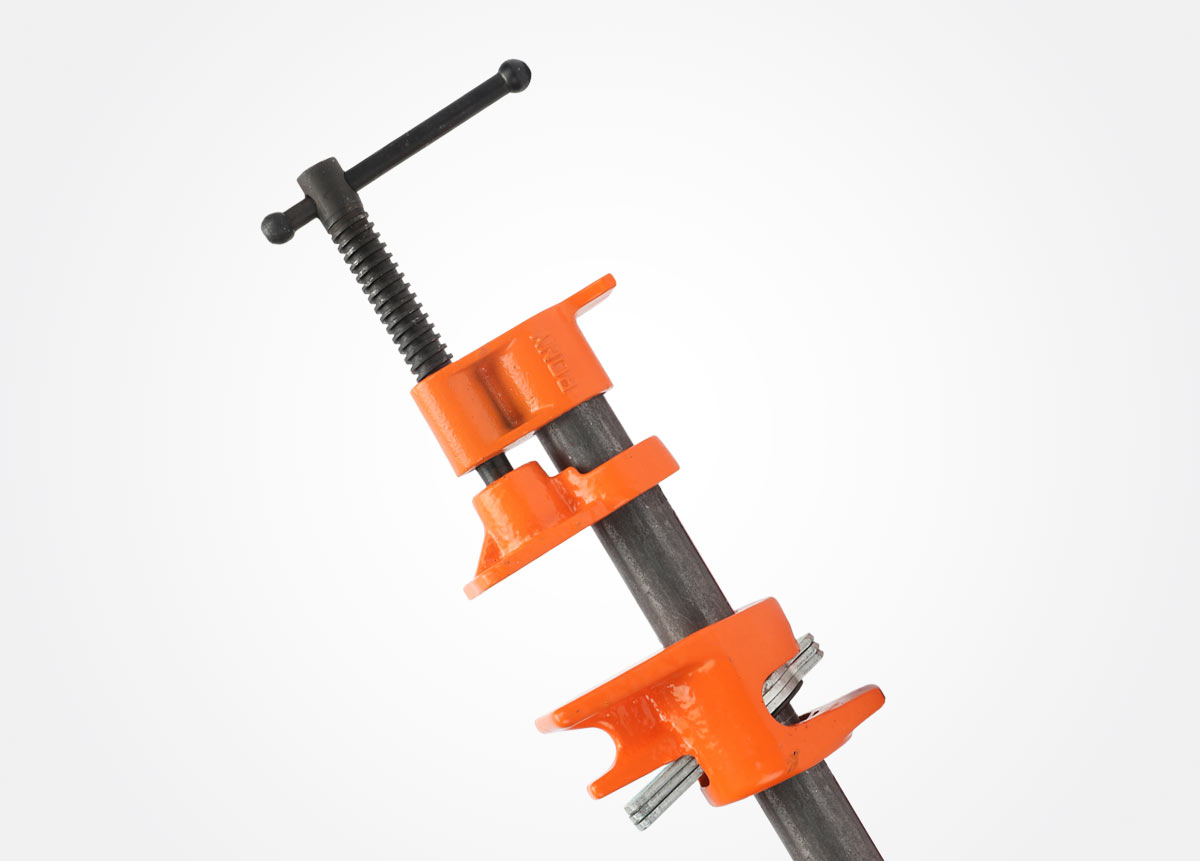
Pipe clamps are a versatile and inexpensive way to secure workpieces during woodworking projects. They’re also great for plumbing jobs that require overhead support and access to hidden pipes or fittings.

Like bar clamps, pipe clamps are made up of two pieces: a “jaw” that screws onto the threads of a length of common threaded black pipe and another piece that slides up and down the length of the pipe to accommodate the size of the woodworking project. They’re available in a variety of diameter sizes, including the standard 1/2 and 3/4 inch pipes that you can buy at your home center or lumber yard.

To use a pipe clamp, you’ll need a piece of wood that’s at least 25 mm wide and 10 mm thick. Some pipe clamps require a threaded end on the pipe, so you’ll need to purchase one of those as well if you want to use them.

You can usually find threaded black pipe at most home centers and hardware stores. Some places will even cut these ends for you.

Once you’ve bought your pipe, prepare it for use by placing a piece of painters tape on its end to protect the surface of the wood from glue and stains that might dribble down the tube. You can also place a piece of foam tape on the pipe to prevent it from bending under pressure.

Then, place the workpiece on the pipe, glue the edges, and clamp it down using the sliding end of the pipe clamp. It’s important to use only enough pressure to hold the joint in place and not to tighten the clamps too much, which can cause the boards to bow up on the middle. This isn’t a problem when gluing smaller pieces, but it can be a challenge on wider boards.

A good way to deal with this issue is to alternate pipe clamps on both sides of the board, so the pressure is distributed across the entire workpiece. You can also add a heavy weight to the middle of the board to keep it from bowing up when you’re tightening the pipe clamps.

Woodworking Vices

Woodworking Vices
Woodworking Vice

Woodworking Vices For Woodworking

Woodworking Vices are a essential woodwork tool that helps you hold your workpiece in place so you can perform specific tasks on it. There are different types of vises that vary in their build and design quality.

These tools are used for a variety of tasks and applications in woodworking, such as cutting, planing, and sanding. However, it can be difficult to choose the right one for your needs.

1. Versatility

A woodworking vice is a tool that allows a person to secure a piece of workpiece. It consists of jaws that help to secure the object and a screw mechanism that allows the jaws to move against one another in order to hold the object tightly.

A specialized woodworking vice is an essential piece of equipment in any shop. It is used to perform a variety of different tasks and can help you achieve a smoother and more stable result every time.

Versatility is the ability to change easily from one activity to another. It can also mean that something is able to adapt or be adapted to different functions or activities.

2. Stability

Woodworking vices are a crucial tool in any woodworker’s workbench. They allow you to cut, drill, sand and glue quickly and accurately.

However, you need to choose the right type of vice for your work. This depends on the kind of woodworking projects you are doing and your shop space.

One of the main questions you need to ask yourself is whether you need a general use woodworking vise or one that is more specialized for your particular project.

A general use vise is a great option for a small woodworking shop, especially if you make a variety of different projects. They’re also easy to find and fairly affordable.

3. Easy to use

A good woodworking vise is an essential tool for any beginner woodworker. It provides a secure grip to the workpiece, which allows it to be manipulated in a variety of different ways.

Depending on your needs, you can choose a vice with sliding or cross-sliding jaws that allow you to adjust the position of the workpiece. Some can even be adjusted in two planes, making them more versatile and useful for a wider range of projects.

A woodworking vice is perfect for holding pieces that need to be glued together. It can also be used for other tasks, such as cutting or drilling. It also comes with bench dogs that are designed to hold gluing material in place until it dries completely.

4. Durability

Woodworking vices are heavy-duty clamping tools that are designed to hold and secure large and heavy pieces of wood. They are used by professional woodworkers and in manufacturing industries to manufacture different types of wooden products.

There are various models of these vices that differ depending on their use. Some of them are permanently bolted to the workbench while others are portable and can be easily moved.

Typically, woodworking vices are made from cast iron. These are durable and are ideal for securing wood without damaging it.

5. Easy to clean

One of the most attractive features of a good woodworking vice is its ease of cleaning. Many of the bare steel parts are often coated with oil or grease, and this can be removed easily by wiping the vise off with a cloth or using a vacuum cleaner.

The threaded parts of the vice should also be regularly oiled and/or lubricated. This will ensure that the jaws move smoothly and can be opened and closed without difficulty.

Some metal working vises also have slide stop dogs, which are handy when dealing with long pieces of material. These make woodworking life much easier by reducing the amount of force required to hold a workpiece, so they are an excellent investment for your shop.

6. Safety

Using woodworking vices is a safe and effective way of holding wood pieces for woodworking tasks, such as sawing and drilling. However, it is important to use them correctly so as not to cause any damage to the workpiece or the workshop’s surface.

A woodworking vice is a type of heavy-duty clamping tool that is often used by professional woodworkers and in manufacturing industries for the production of wood products, such as plywood, veneers, containers and flooring.

There are several types of woodworking vices, including face, tail and leg vices. They all are installed at different positions on a workbench, so each one is ideal for specific jobs and applications.

7. Easy to maintain

It is possible to keep a woodworking vice in tip-top condition without a lot of effort. To do so, all you need to do is clean the threaded and moving parts often, and lubricate them with machine oil or WD-40 Specialist(r) Dry Lube.

This is important because it will help to maintain the smooth operation of the jaws and ensure that they open and close smoothly. You also need to wipe the vise with a cloth regularly, so that any dust or dirt doesn’t build up on it and damage it.

It is also a good idea to periodically resurface your bench top and to plane the jaws of your vice so that they have a good grip on your work. These tasks will make a huge difference to the performance of your vice and should not be overlooked.

8. Convenience

A woodworking vice is a convenient tool that makes it easier to do various woodwork projects. They are available in different types and each has its own advantages, so it’s important to choose the right one for your needs.

The type of woodwork vice that you choose will depend on the size and shape of your project. Larger and heavier projects are better suited to bigger vices, while smaller and more delicate projects require a small vise.

Generally, a woodworking vice attaches to the underneath of a workbench so that its top jaws are flush with the bench’s surface. This makes it easy to do heavy-duty clamping.

9. Affordability

A woodworking vice is a great way to keep your hands free while drilling or sawing wood. It also aides in making the job quicker and easier by keeping the workpiece in a low position.

A vice is not cheap, but the right model can help you complete your woodworking projects with more confidence. They are available in a wide range of sizes and features.

A woodworking vise is a must have for any serious home woodworker. A good one will last a long time and make your woodworking tasks more efficient. The best models will also be a joy to use. The most important thing is to know your budget and the type of work you do before you start shopping. After all, the wrong vise can be a disaster. Choosing the right one could save you a lot of headaches in the future.

10. Versatility

Versatility is the ability to change or adapt to a variety of situations. You can be versatile in many different ways, such as being able to play multiple sports or being flexible with your moods.

According to Etymonline, versatile is derived from the Latin word versatilis which means “turning, revolving, moving.” It can be used as an adjective or as a noun. Examples of versatile include a soccer player who is able to play forward, defense, and goal keeper, a master chef who can cook a variety of dishes, and a botanist who has versatility in their work.

One of my favorite uses for a tail vice is in the wood shop. Hand planing against a stop is a great way to learn proper hand planing technique.

Rockler Tools


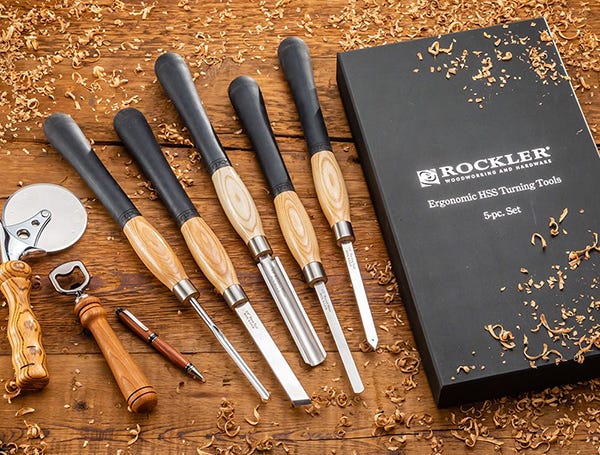
Rockler Ergonomic Turning Tools
Rockler Woodworking Tools

  Rockler Tools

Whether you’re just starting out or you’ve been a hobbyist woodworker for years, Rockler offers tools and lumber to suit all your needs. They also offer woodworking classes in their stores, where you can learn how to make a unique piece of furniture.

Aside from tools, they also carry different types of wood materials like dowel rods and inlays. They even sell finishing products and kits for gluing wood materials together.

Jig-It Knob and Pull Pro Drilling Guide

The Jig-It Knob and Pull Pro Drilling Guide from Rockler Woodworking Tools is a high-quality cabinet hardware jig that enhances the speed and accuracy of hardware installation. This product is highly recommended by many professionals and homeowners as it provides a high level of quality and reliability.

This jig is made from a combination of stainless steel and aluminum parts which make it durable and corrosion-resistant. It has dual metric and inch calibration that makes it easy to measure and drill holes accurately.

It also includes a storage bag to keep all the tools in place and make it easier to carry from one place to another. It also has a quick-release drill guide that helps to detach the parts and make adjustments for measurements quickly.

The jig can be used for a wide range of applications including mounting handles, knobs, and pulls on cabinets, drawers, and doors. The jig has two drilling guide holes that help to mount the hardware properly on the surface of the cabinet or door.

In addition, the jig has a stainless steel ruler with inch and metric scales that can be used for precision measurement. It is lightweight, portable, and has a 2-year warranty for durability.

Aside from the drill guide, this jig set has a number of accessories which include a drill bit, drill bushings, and starter and end stops. It is a high-quality jig set that can be used by amateurs and professional carpenters alike.

Besides the drill guide, this jig has an adjustable start stop collar for repeat drilling operations. It can be adjusted to set the jig at a distance of up to 4 inches from the edge of the cabinet or drawer front in one direction and up to 6 inches in the other direction.

The jig is designed to create absolutely accurate spacing for pull borings and can be used on closet doors, door handles, and recessed front drawers. It has a reversible drill template that offers a 0.0002-inch tolerance and calibrated to 0.001 square inches for accuracy.

The jig has a simple design that is easy to set up and operate. Its patented calibration system and laser-engraved rulers make it a reliable tool for measuring and drilling holes.

Clamp-It Small Corner Clamping Jigs

Lining up panels at a 90deg angle while you drive nails or screws can be an exercise in frustration. Your fingers are too close to the business end of your nailer for comfort, and pieces tend to shift around, making it difficult to keep them in perfect alignment.

The Clamp-It Small Corner Clamping Jigs from Rockler Woodworking Tools provide the right amount of support to hold your next project together. They come in a variety of sizes and configurations, all of which have soft pads to help prevent marring of the workpiece.

They also have a high-quality construction with an extra wide base, thick cushioned pads and a strong Acme threaded clamp screw that holds your panel securely in place. These jigs are made from durable glass-filled polycarbonate, so they will stand up to the rigors of regular use.

These jigs are especially useful for smaller projects such as drawer construction, where they can hold the bottom corners of your cabinets securely and prevent them from tipping over. They are sized to fit half-inch and 3/4-inch thick cabinet stock.

One of the slickest ways to get your project finished in record time is to have a clamp that will firmly secure your components in place before you glue them up. The best way to do this is by using a right-angle clamping jig like this.

You can use it to hold any type of material, from wood, plastic or metal. Its a great tool for woodworking, and can even be used to help you build a custom cabinet or a desk.

The Clamp-It Small Corner Clamping is a must-have tool for any woodworker. It’s designed to be used with the Rockler Clamp-It Assembly Square, which is available separately (#58918, sold separately). When combined, this jig and assembly square are the best way to assemble cabinets or any other project that requires precise clamping at a 90deg angle. The jig can also be used to make quick work of other tasks, such as edge gluing, trim repair and molding.

Magnetic LED Task Light

Rockler Woodworking Tools, with over 25 stores across the country, is one of the largest sources for the woodworking industry. Their selection includes everything from hand tools to wood materials, finishing tools, and measuring and marking accessories.

For example, they have a wide variety of LED task lights. Some of these are more suited for a workshop than others, but all of them are capable of providing extra illumination where you need it.

Some of the best LED work lights are portable, so you can keep them with you as you work. These options range from small handheld flashlights to larger fixtures that can provide plenty of brightness for a large workspace.

This particular model from Innofox is a two-pack that comes with a fully rechargeable design and features a 40W COB LED panel that offers up to 1500 lumens of light. The battery lasts for about 2 hours of use on full power, which is enough for most tasks.

Another great option is the IlluminMax LED Magnetic Work Light, which comes in a handheld, collapsible design. It features a strong neodymium magnet built into the narrow base and a bright LED that folds into the handle. It is rated to run on four AAA batteries and weighs in at around 6 ounces, making it ideal for mechanics or homeowners who prefer a handheld option over a stand-alone unit.

The magnetic base is able to clamp securely onto metal surfaces for hands-free steady lighting. It also has a folding head that adjusts to multiple angles and swivels 180 degrees for precise light placement.

While this is not the most bright light we tested, it does offer a lot of versatility. It can be used on a desk, attached to a metal bench or even mounted to a car hood.

Lastly, the Magnetic Cord Keeper from Rockler is an innovative device that keeps unplugged power tool cords off the ground so you can grab them and plug them in when you need them. This is a really useful piece of gear for any woodworker who has to deal with a cluttered shop floor or garage.

Joinery Tool Bag

If you’re looking for a sturdy bag to store your hand tools and other supplies, Rockler Woodworking Tools has the perfect solution. The Joinery Tool Bag is made of a heavyweight polyester weave and features a rugged diamond-pattern PVC reinforced bottom. Its main compartment divider is reinforced with a plywood core, and there’s a comfortable, rugged plastic carrying handle. The bag also has seven pockets to provide storage for smaller tools, or fasteners like screws, nails, biscuits and dowels.

When you’re working on a complex project, it can be a good idea to carry around a hammer so that you have a light-duty tool that’s always close by. The Halder 50mm mallet is a good size that has soft blue and medium-hard grey faces and will be ideal for tapping or striking the corners of a tabletop, trim molding or other wood joinery.

While a hammer isn’t necessarily the most useful tool for your woodworking projects, it can be a good idea to keep one on-hand because it can help you get the job done quicker. This particular Halder hammer is a 50mm face size and has a cast iron head, so it’s durable enough for use on heavier, more challenging projects.

There are also many other hammers that you can purchase that have different faces and are designed for specific applications. Some of these include the Craftsman hammer, which is an excellent choice for home improvement projects.

You can also choose the Halder Xtreme hammer for more professional jobs, or you can check out the Halder Pro series of hammers to find a lighter-duty hammer that’s great for home improvement or general construction. Regardless of your needs, a good quality hammer is an invaluable addition to any shop.

Besides the hammer, it’s important to have some other hand tools on hand in your shop. Whether it’s a block plane to chamfer or trim a tabletop, or a small saw for fine-tuning edges or drawer slides, a few simple hand tools can make all the difference in your shop work.

The tool pouches from Rockler are designed for storing a variety of tools and accessories, including gluing tools, marking and measuring aids and fasteners. They come in a 3-Pack, and each pouch has a metal grommet that makes it easy to hang on pegs or hooks throughout your shop.

Sliding Bevel Top 6 Tools For Woodworkers

Sliding Bevel top 6
Sliding Bevel Top 6 Tools For Woodworkers

Sliding Bevel Top 6 Tools For Woodworkers

Sliding Bevel Top 6. A sliding bevel is a great tool for woodworkers as it allows them to take accurate measurements of the angle of a piece of wood. Whether you are a beginner or an experienced woodworker, you will need this tool to help you with your projects.

A sliding bevel can also be used for tracing and transferring angles from one piece of wood to another. This is a useful tool for a variety of different projects and can be used by woodworkers, carpenters, or metal workers.

1. DOITOOL Sliding T-Bevel Gauge Sliding Bevel Top 6

Sliding Bevel Top 6 Tools For Woodworkers.The DOITOOL Sliding T-Bevel Gauge is a good choice for woodworkers and carpenters who need a sliding bevel to mark angles on their work. This tool is easy to use and can be adjusted to any angle between 0 and 360 degrees. It is also very durable and safe to use.

This tool is great for marking dovetails, taking off angles from antiques, and transferring an obscure angle from a plan. It has a unique locking mechanism that delivers precisely adjustable drag and unobtrusive locking from the end of the tool.

It is made from high-quality materials and has a nice finish. It also features a wooden handle that is comfortable to hold and can be used for long periods of time.

The blade of the tool is 9 inches long and features millimeter and inch graduations on both sides, making it easy to measure angles. It also has a metal end cap with an adjustable knob in the middle.

The blade is made from stainless steel and the handle is made from wood. It can be adjusted to any angle between 0 to 360 degrees and can be locked in place. It is also easy to clean and is safe to use.

2. Shinwa Sliding Bevel

Sliding Bevel Top 6 Tools For Woodworkers. A sliding bevel is a great tool to mark off odd angles when installing molding, laying out dovetails or framing cuts. They can also be used to transfer an angle accurately from one piece of work to another thanks to a handy locking mechanism.

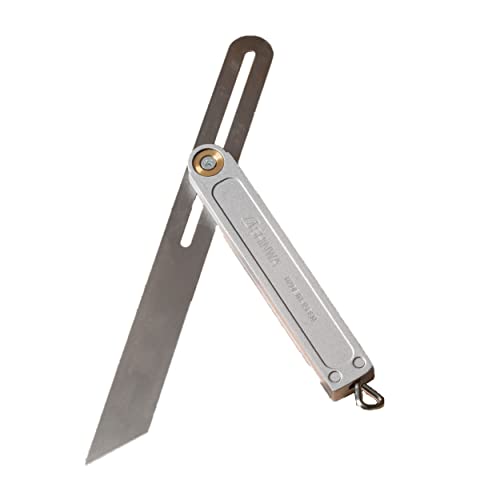
The Shinwa Sliding Bevel Japanese Type is a nice & well-crafted bevel gauge made in Japan from heavy duty aluminum construction & has a solid feel in the hand. The 10″ stainless steel blade can be set at any angle from 0deg to 180deg & is held in place with a knurled brass locking knob.

These top quality sliding bevels have an aluminium body with a chromium coated stainless steel blade. A nice & solid feel in the hand and the best part of this gauge is that it locks rock solid with just a quarter turn of the end mounted screw (you don’t need to do it up tight).

This premium Japanese aluminum bevel boasts a large locking screw in the handle allowing you to lay it flat on either side of the bevel. It also happens to be the shortest of the lot at only 150mm long!

A fantastic little bevel gauge that should not be overlooked in your shop. It is a must have for every timber framer & has been designed to be lightweight, robust & accurate. It is also a good value for money at only £59.99.

3. Swanson TS149

The Swanson TS149 is a finely crafted tool that has been designed with professional woodworkers in mind. It can mark, measure, and transfer angles as well as double as a depth gauge for a variety of construction and woodworking jobs.

This 9 inch sliding t-bevel with hardwood handle has a stainless steel blade that is etched to provide both standard and metric gradations for increased versatility. It features brass bindings on both ends to eliminate twisting, and a large knurled thumb knob for securing the blade in place.

It also comes with a 1 year warranty. This product is a must have for any woodworker or carpenter, whether you are a beginner or a seasoned veteran.

Yes, it is 100% safe to purchase Swanson TS 149 9 Inch Sliding T Bevel With Hardwood Handle Stainless Steel Blade And Brass Fittings 4 Pack from desertcart, which is a legitimate site that has been operating in 164 countries since 2014. They are using the latest technology to safeguard your financial details and transactions online, and you will find several positive reviews on portals like Trustpilot.

The TS149 is a finely engraved tool that will make a great addition to your shop. It is easy to use and will help you complete your projects in less time than you might imagine. With a small amount of practice, you will be mastering the craft in no time.

4. ECE Precision Sliding Bevel

Sliding Bevel Top 6 Tools For Woodworkers. The ECE Precision Sliding Bevel is an essential layout tool for those who need to lay out angles or check the accuracy of their work. It is a large multi-function tool that can be used to mark, measure and transfer angles.

It has a U-shaped brass profile all around it to protect the edges from damage that can lead to inaccuracy. The blade is blue steel and the handle is made from rosewood.

Using this sliding bevel is easy. Loosen the wing nut and swing the bevel’s blade to rest against the angle you want to measure, then tighten it back in place.

Another use for the sliding bevel is to capture the shoulder angle of an angled tenon and then to copy this onto the face of the workpiece. This will enable you to mark out cheeks for a tenon that’s perpendicular to the angled shoulder on the workpiece.

When you’re working on a piece of furniture or making something like a door or window, joints can be crucial for the quality of your work. A poor joint can result in buckets of filler having to be used and will ruin your project.

Having precision layout tools at your disposal will allow you to produce high quality woodwork and will ensure that your work is of the highest standard. Ulmia has a full range of precision layout tools and I was lucky enough to test three of them, the try square, multifunction sliding bevel gauge and marking gauge.

5. Shinwa Sliding Bevel Japanese Type

One of the woodworker’s most useful tools is the sliding bevel. It can be used to determine angles or to transfer them accurately from one piece of work to another.

A sliding bevel consists of a stock with a slotted blade that can be set and locked at any desired angle from 0 to 180 degrees. It differs from a try square in that its angle can be changed quickly and easily using a thumbscrew or wing nut to lock it.

Shinwa make a fantastic range of sliding bevels, all of which are made in Japan. They are all lightweight, compact and robust and can be a real asset to any workshop.

This particular Shinwa model is a very good quality stainless steel slider bevel gauge with a big blade and nice solid feel in the hand. It is also nicely machined, a very nice feature in a tool that has to be able to withstand lots of abuse!

The Shinwa Sliding Bevel Japanese Type is an excellent example of the sliding bevel craze, it is lightweight and can be adjusted to any angle. It is particularly useful for measuring angled joints such as dovetails and tenons, but can be used in many other ways too.

6. Shinwa Sliding Bevel Stainless Steel

The Shinwa Sliding Bevel Stainless Steel is one of the best bevels on the market. It has a premium design and can be set to any angle between 0 and 360 degrees. It is also safe and durable for a long time of use.

This is a very useful tool for woodworkers and general contractors. It can be used to measure angles and mark the cutting edge of a wood piece. It can also be used to transfer angles from one piece of wood to another.

It is made of stainless steel, which makes it a very durable and safe tool for long use. It also has a black oxide coating that resists rust and wear over time.

This bevel is also easy to store in a drawer or bag when it is not in use. It is a good tool for woodworkers, carpenters, and general contractors.

The Shinwa Sliding Bevel is a great tool for measuring angles and marking the cutting edge of a wood piece. The bevel can be set to any angle between 0 to 360 degrees and can be locked in place. It is also safe and durable for storing in a drawer or bag when it isn’t in use.

Tape Measures What To Look For

Tape Measures What To Look For

Tape Measures What To Look For

Tape Measures What To Look For. A good tape measure will provide accurate measurements, be durable, and have a wide range of features. If you’re looking for a new measuring tape, we’ve put together a list of the top ten models.

The best tape measures are easy to extend and retract, have a wide range of features, and are simple to use. We tested these features in each of our top picks to find the perfect choice for you.

Tape Measures What To Look For 1. Durability

A good measuring tape can make a huge difference in a project. That’s why it’s important to pick a sturdy model that can withstand repeated drops onto concrete and resist the wear of everyday use.

The best measuring tapes have durable casings, long-lasting blades, and powerful self-retraction mechanisms that can stand up to a lot of abrasion. In addition, many offer a lifetime warranty against manufacturer’s defects and flaws in craftsmanship.

Some of the top tape measures also feature a magnetic hook and a nylon-coated blade, which help to reduce the amount of wear that rusts or peels away. This can help reduce the cost of replacing a tape measure over time.

Tape Measures What To Look For  2. Accuracy

If you’re looking to get a tape measure for your project, you’ll want to find one that’s accurate. That’s especially important for woodworkers and carpenters who depend on their measuring tools to help them achieve precision.

A good way to check the accuracy of your tape measure is to use a ruler and compare the measurements you get with the outside measurements on your tape. If the 1 inch marks on the ruler and the ones on the tape match up perfectly, your tape measure is accurate for outside measurements.

Tape measures can lose their accuracy over time. The numbers on the tape can fade, the tape itself can bend or rust, and other errors can build up as you use it. To avoid this, make sure you’re calibrating your tools to a standard through calibration before using them.

3. Easy to read

Whether you’re building shelves or hanging pictures, a good tape measure is a must-have tool. It should be durable, accurate, and easy to read.

Generally speaking, the best tape measures have whole-inch numbers printed on them, as well as smaller fractional markings that are clearly indicated. This helps you avoid squinting at tiny lines when determining the measurement.

Most cased tape measures have a belt clip, which attaches them to your tool belt or pocket. Some pros and do-it-yourselfers find this annoying because it adds bulkiness and can make them harder to handle.

4. Ergonomics

A tape measure should feel natural in your hand. That means a small casing and grippy rubber in the right places, and it also needs to hook naturally on the top and bottom without flipping.

A good ergonomic tape measure will make your job easier. This is especially true in woodworking applications.

The best tape measures have a blade that has a curve to keep it from bending when you extend it a few feet. That makes it less likely to bend and sag, which can make it harder to use.

Other useful features include a belt clip, a rubber over-mold for in-hand comfort, and a positive click lock. Some of these features come with extras, such as a fraction marking or Waist-To-Hip-Ratio calculator.

5. Flexibility

When you are working on a project that requires measurements, you will need to use a tape measure. This handy tool can help you with surveying distances, assessing fabric length and width, and measuring body dimensions.

There are many tape measures on the market, each designed for a specific application. When selecting one, you need to consider the size and flexibility needed for your projects.

For instance, a flexible tape measure may be easier to use when you are trying to measure on a curve surface. You will also need to consider the standout of the blade, which is the distance that the unsupported part can extend before it sags or bends.

6. Convenience

A tape measure is a tool used for measuring objects and distances. It is widely used for construction, building, and home improvement projects.

A measuring tape comes in several lengths, from 6 feet to 25 feet and even longer. Shorter tapes are ideal for smaller-scale projects like hanging artwork or measuring the inside width of a windowsill.

Longer tapes are more durable, especially if they are made of steel. They are also lighter and more affordable than fiberglass ones.

Some cased tape measures feature a small toggle that locks the blade in place as you extend it, protecting it from damage and speeding up your work. Alternatively, some have a button that retracts the blade automatically.

7. Two-sided printing

Tape measures are a staple of any toolbox. They’re durable, easy to read and take accurate measurements.

A good tape measure also has two-sided printing, which saves paper when printing multiple pages. You can select the option to print on both sides of a page in your printer’s settings.

To print on both sides, open the Print dialog box in your software (Word, Acrobat). Look for a menu that says Double-Sided or Long-Edge Binding. Depending on your application, the menu may vary slightly.

8. Magnetic hook

A magnetic hook can be a handy feature on a tape measure. This can be used to attach it to metal items like steel studs and conduit.

However, it also makes it more likely to catch on things you don’t want it to, which can be a nuisance. That’s why it’s important to find a good magnetic hook.

Hart, Milwaukee, and Stanley all have double-hook designs with tiny “rare earth” magnets that turn your hook into a handy grabber for measuring.

Klein’s 25-foot double-hook magnetic measure is one of the most versatile and high-quality options we tested. It features a measurement scale printed on both sides of the blade for versatility, and rare-earth dual angle magnetic hooks that easily attach to conduit and steel studs.

9. Nylon-coated blade

Metal blades coated with nylon provide a more durable and versatile option than those without it. Nylon is also abrasion resistant, meaning it won’t rip easily or wear down over time.

The standout capability of a tape measure’s blade is essential for accurate measurements. The best ones are designed to stand out for 6 feet or longer before bending.

A high-quality steel blade isn’t just a good idea for general measuring tasks; it’s also a necessity for professional woodworkers, cabinet builders, and carpenters. Those working with materials like wood or aluminum can’t afford to be without one.

10. Price

Whether you’re an electrician or a carpenter, or just need to hang art or wallpaper, a tape measure is a handy tool that can save you time and money. However, the price of a tape measure can vary widely depending on the quality and features that you need.

Accuracy is also a big factor when buying a tape measure. Many are Class I, II or III accurate and most are rated to EU standards.

Besides accuracy, durability is also an important feature to consider when purchasing a tape measure. The best models have metal blades that won’t bend easily when extended unsupported.

You cannot copy content of this page